Four is the year most children meet letters properly. In England that's Reception; in Australia it's Kindergarten (NSW), Prep (Vic, Qld, Tas) or Foundation; in the US it's pre-K or the start of kindergarten. Schools will start teaching letter sounds within the first few weeks, usually a few a week, and by the end of the year most children will be blending simple words. Here's how to help without getting in the way.
Rule one: pure sounds
This is the thing that trips up the most well-meaning parents. The letter m says mmm, not muh. s says sss, not suh. t is a tiny t, not tuh. If you add an "uh" to every consonant, c-a-t becomes cuh-a-tuh and your child can't hear cat in it. Say the sounds the way they sound inside a word, and blending becomes obvious.
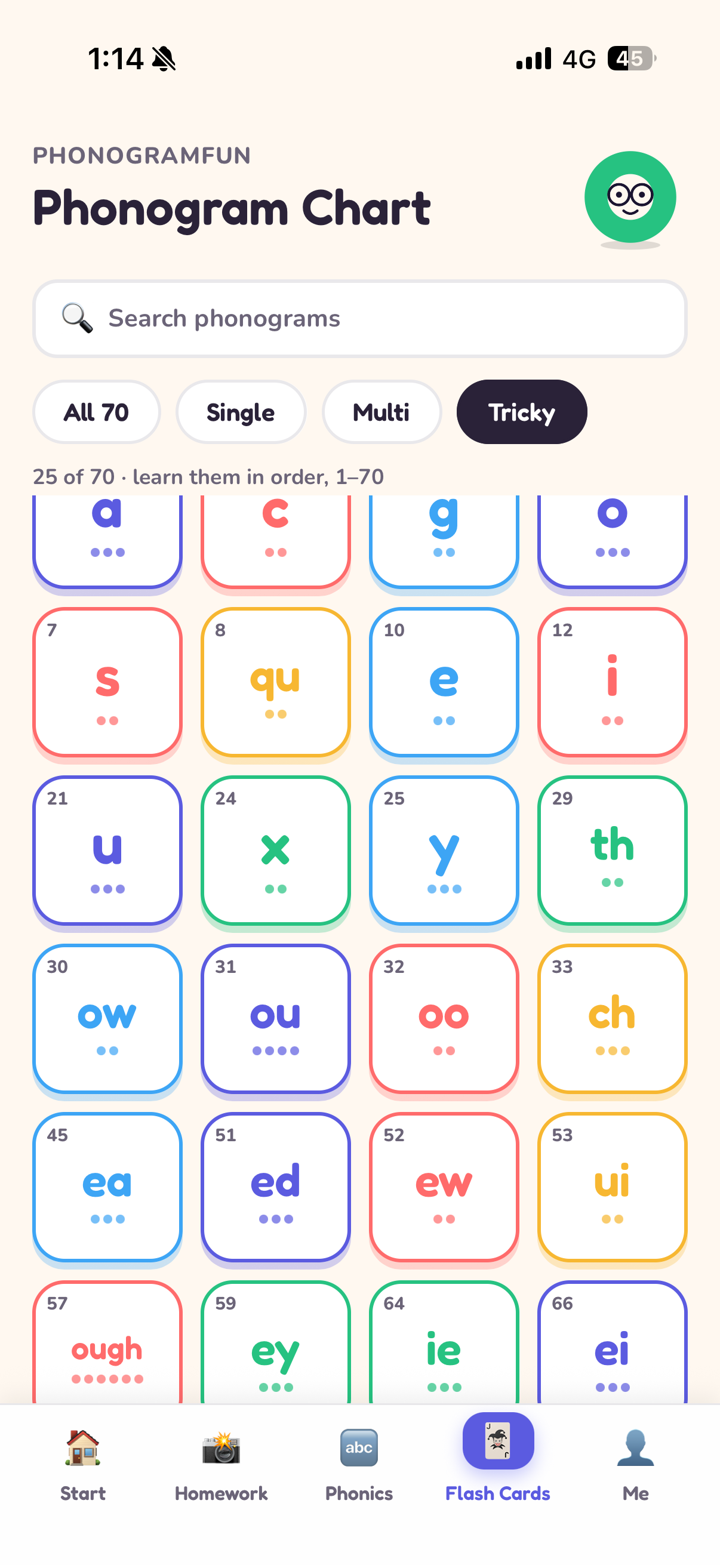
Not sure what a sound should be? Phonogram Fun's chart plays all 70 of them, said properly, on tap. It's the fastest way to check yourself.
What a four-year-old is learning
- Letter sounds, usually in an order that gets to words fast. Most programmes start with s, a, t, p, i, n because you can make sat, pin, tap, tin, pat almost immediately.
- Oral blending: you say the sounds, they say the word. "What's d-o-g?" This is done without any letters at all and it's the most valuable game at this age.
- Oral segmenting: the reverse. "What sounds are in sun?" /s/ /u/ /n/.
- First sounds: "What does ball start with?"
- Letter formation: schools teach the sound and the shape together. Big movements first (in the air, in sand, on a steamy window), pencil later.
Games that work
- Robot talk. You're a robot who can only say sounds: "Please pass the c-u-p." They have to blend to work out what you want. Then swap.
- I spy with sounds. "I spy something beginning with /b/." Sound, not letter name.
- Sound hunts. Pick a sound for the day and find things around the house that start with it.
- Silly sound swaps. "What if cat started with /h/?" Hat. "With /m/?" Mat. This is phonics without knowing it.
- Read the same books over and over. And run your finger under the words now and then, so they see that print goes left to right and the words you say are the marks on the page.
Your child will pick up letter names from the alphabet song and from their own name, and that's fine. But when you're helping with reading, use the sound. “That's /s/” rather than “that's an ess”. Sounds are what blending is built from.
How much, how often?
Five minutes at a time, woven into the day, beats a twenty-minute sit-down. If your child pulls away, stop. At four, enthusiasm is the asset you're protecting.
Where the app fits at four
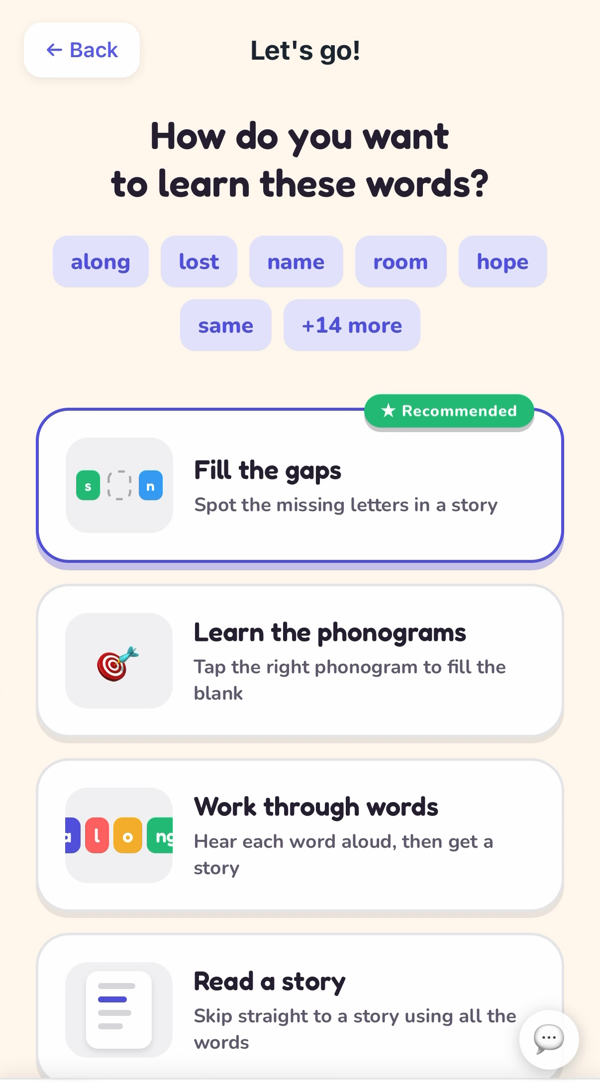
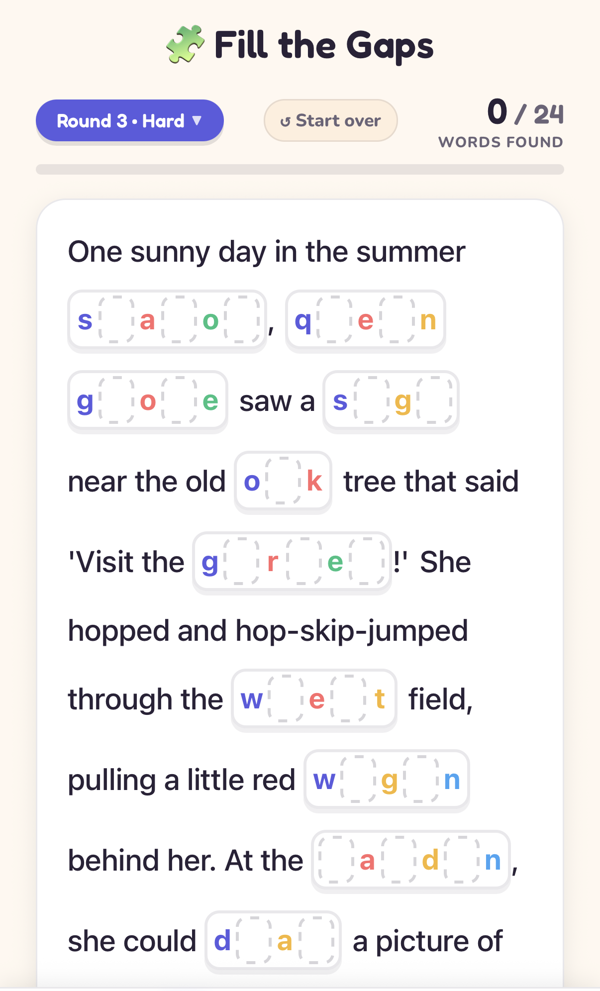
Phonogram Fun is designed for five and up, but three parts of it are useful now, mostly for you:
- The phonogram chart: all 70 sounds, tap to hear each one said properly. Use it to check your own pronunciation.
- The word analyser: type any word and watch it split into its sounds (cat). Handy when your child asks about a word and you're not sure how to break it up.
- Sound playground: a low-key place to tap sounds and hear them. Some four-year-olds love it; if yours doesn't, no matter.
Questions parents ask
How many letter sounds should a 4 year old know?
It depends on when in the year you ask. Schools introduce them at three or four a week, so a child a few months into Reception or Prep might know 10 to 15, and by the end of the year most children know all the single-letter sounds and a handful of digraphs like sh and ch.
Should a 4 year old be reading?
Some are blending simple words by the end of the year; some aren't yet. Both are normal. What you're looking for is that they can hear sounds in words (rhyme, first sounds, clapping syllables) and are picking up letter sounds steadily.
What order should I teach the sounds in?
Follow whatever your child's school does, so you're not confusing them. If they're not at school yet, s, a, t, p, i, n is the classic start because it makes words straight away.
What's the difference between phonics and phonemic awareness?
Phonemic awareness is hearing the sounds in spoken words, no letters involved. Phonics is matching those sounds to letters. Four-year-olds are doing both at once, and the hearing part is the one parents most often skip.