Every June, every Year 1 child in England sits down with their teacher, one to one, and reads 40 words out loud. That's the Phonics Screening Check. It takes about five to ten minutes, there's no writing and no time limit, and most children have no idea it was a test.
It matters, though. It's the first formal measure of whether your child can do the one thing early reading depends on: look at letters, turn them into sounds, and blend those sounds into a word. This guide covers what's in it, what the numbers mean, and what to do at home in the months before.
What the check looks like
- 40 words, read one at a time from a booklet, to the child's own teacher (or another familiar adult).
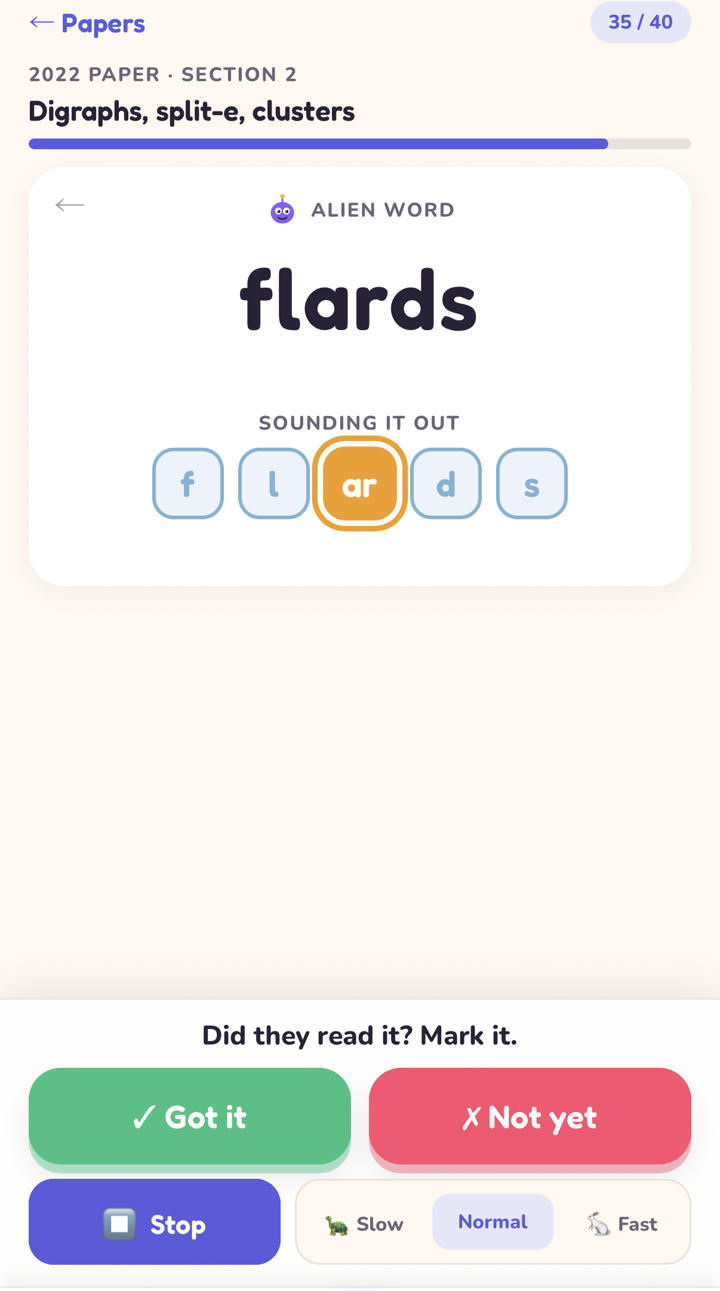
- 20 are real words and 20 are made-up "pseudo-words", usually called alien words because each one sits next to a little alien picture so children know it isn't a word they should recognise.
- The words get harder as the check goes on: simple three-sound words like sit first, then digraphs (ch, sh, ai), split digraphs (a-e as in cake), consonant clusters (st, mp) and finally two-syllable words.
- Untimed. If a child stalls, the teacher can prompt them to sound it out, but can't help with the answer.
- Held in the week commencing the second Monday of June (in 2026 that was 8 June; the 2027 window is expected to follow the same pattern; your school will confirm the date in the spring term).
The pass mark, and what "expected standard" means
The threshold has been 32 out of 40 every year since the check began in 2012. Officially there's no "pass" or "fail": a child either meets the expected standard or doesn't yet. Schools have to tell you which by the end of the summer term, and most tell you the score too.
Nationally, about 80% of Year 1 children met the standard in 2025, and by the end of Year 2 (after a retake) about 89% have. The Department for Education has said it wants that Year 1 figure to reach 90%, which is why phonics is getting more attention in schools, not less.
One in five children not meeting the standard in Year 1 is not one in five children who can't read. A large share of them are within a handful of marks and blend perfectly well in a book but freeze on isolated words, or lose marks on the alien words because they try to turn them into real ones. Both are fixable with the right kind of practice.
What happens if your child doesn't meet the standard
Nothing dramatic. The school will give extra phonics support in Year 2 and your child sits the check again the following June. There's no impact on their class, their reports or their SATs entry. The best thing you can do is treat it as information: it tells you which sounds still need work, and you've got a whole year.
Why the alien words are in there
Parents find the alien words the strangest part. The logic is simple: a child who has memorised what ship looks like can read ship without knowing any phonics. But they can't have memorised shup. The only way to read shup is to know that sh says /sh/, blend it with /u/ and /p/, and say it. Alien words are the purest test of decoding there is.
The catch is that children who are already reading well often stumble on them, because they instinctively "correct" the alien word into the nearest real word (shup becomes ship, vap becomes van). That's marked wrong. So the single most valuable thing you can practise at home is reading made-up words exactly as written, without guessing.
The sounds your child needs by June
Your child's school will be following a phonics programme (Little Wandle, Read Write Inc, Bug Club, Twinkl, Essential Letters and Sounds and so on). They differ in order and in how they name things, but by the end of Year 1 every programme expects the same core:
- ✓All single letter sounds, said purely (mmm, not muh).
- ✓Consonant digraphs: sh, ch, th, ng, ck, wh, ph.
- ✓Vowel digraphs and trigraphs: ai, ee, igh, oa, oo, ar, or, ur, ow, oi, ear, air, ure, er, and the alternatives (ay, a-e, ea, ie, ue, ew, oy, ou...).
- ✓Split digraphs: a-e, e-e, i-e, o-e, u-e (the "magic e").
- ✓Blending four and five sounds, including adjacent consonants: st-o-p, b-l-e-n-d.
- ✓Two-syllable words: sun-set, rab-bit.
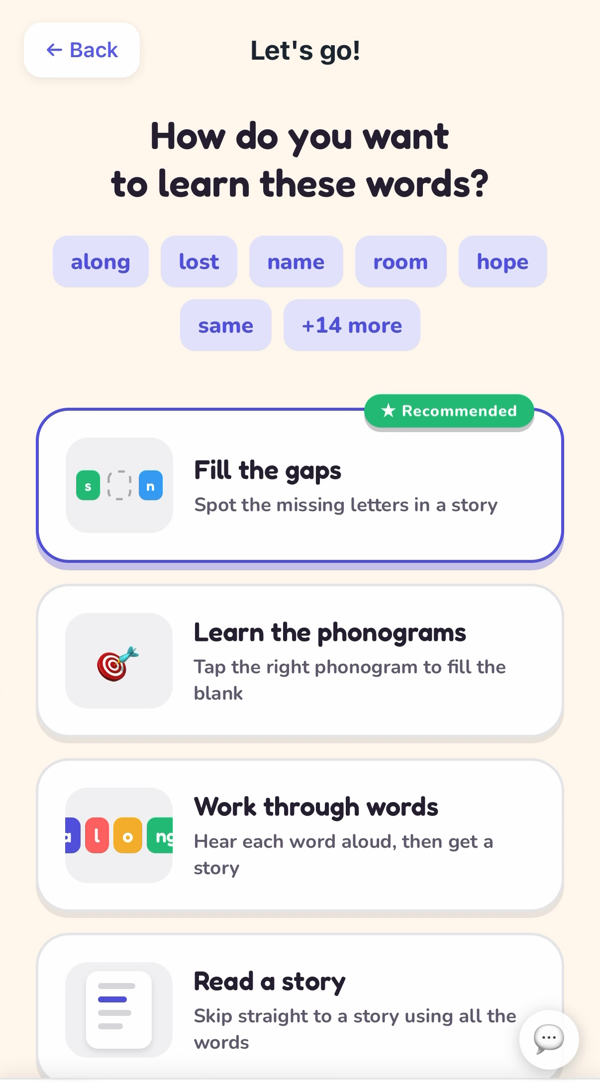
That's a lot of spelling patterns. Phonogram Fun organises them the way the Spalding method does, as the 70 phonograms that build every English word, and shows your child which of the 70 they've got and which they haven't.
How to practise at home (ten minutes, most days)
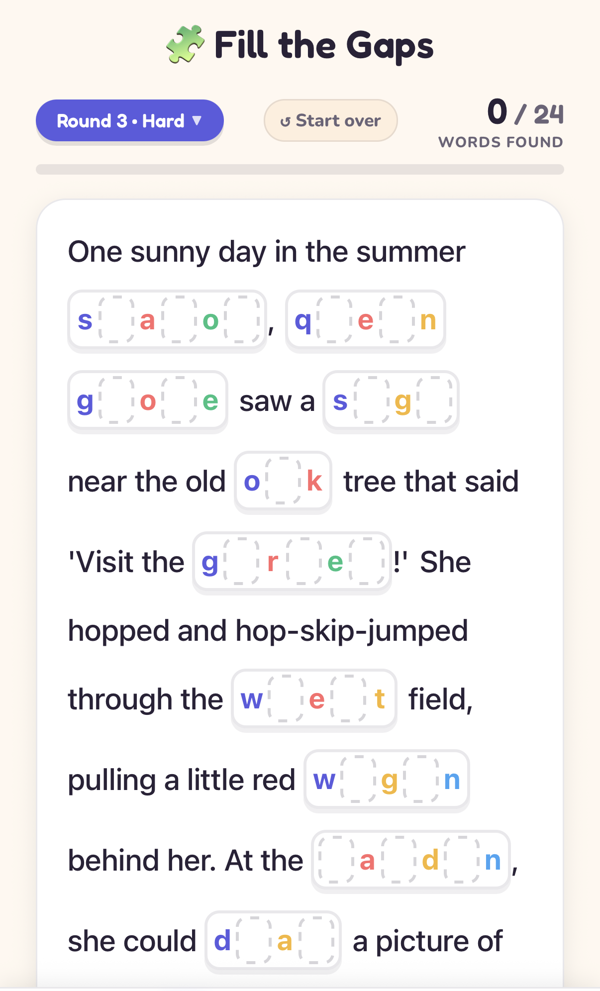
- Use real past papers. The government publishes every past check. They're the best possible practice material because they're exactly the format your child will see. Phonogram Fun has all twelve of them built in, with you as the teacher.
- Read the alien words too. Half the check, and half the practice. Praise "reading what's there", not "getting it right".
- Sound it out, don't say it for them. When they stall, cover all but the first phonogram and reveal one at a time. If they still can't, model the sounds slowly (sh... i... p... ship) and let them have another go.
- Keep it short. Ten words is a session. A whole paper is a treat, not a routine.
- Don't stop reading to them. Phonics gets them decoding; being read to gives them the vocabulary and the reason to bother.
- Work the gaps. If igh and ure are the ones that wobble, spend your ten minutes there, not on the sounds they already own.
What Phonogram Fun includes for the check
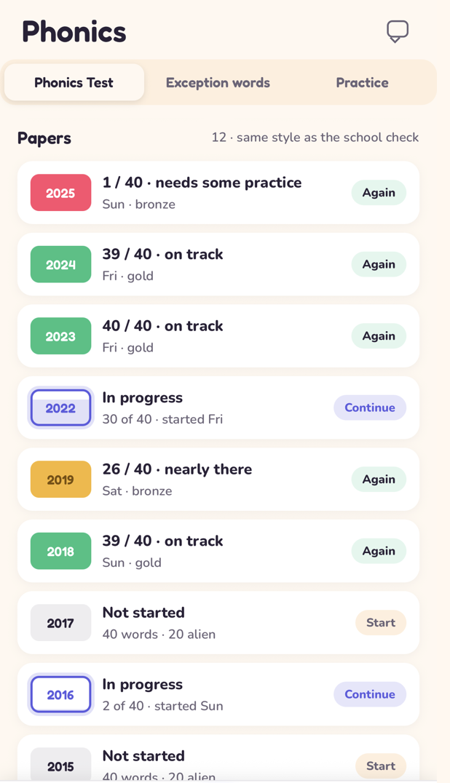
- 12 real past papers from England's Phonics Screening Check, 2012 to 2025 (2012 to 2019 and 2022 to 2025), published by the Department for Education under the Open Government Licence.
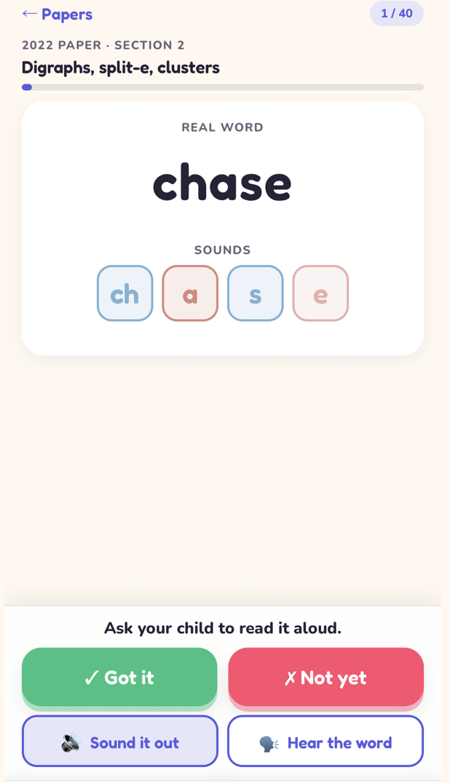
- Real and alien words: 40 words per paper, 20 real and 20 alien, in the same order as on the day.
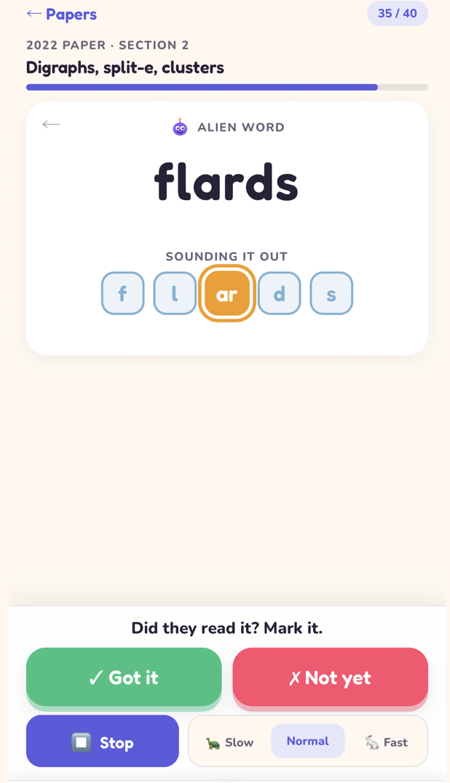
- An Australian or British voice to sound out any word, one phonogram at a time.
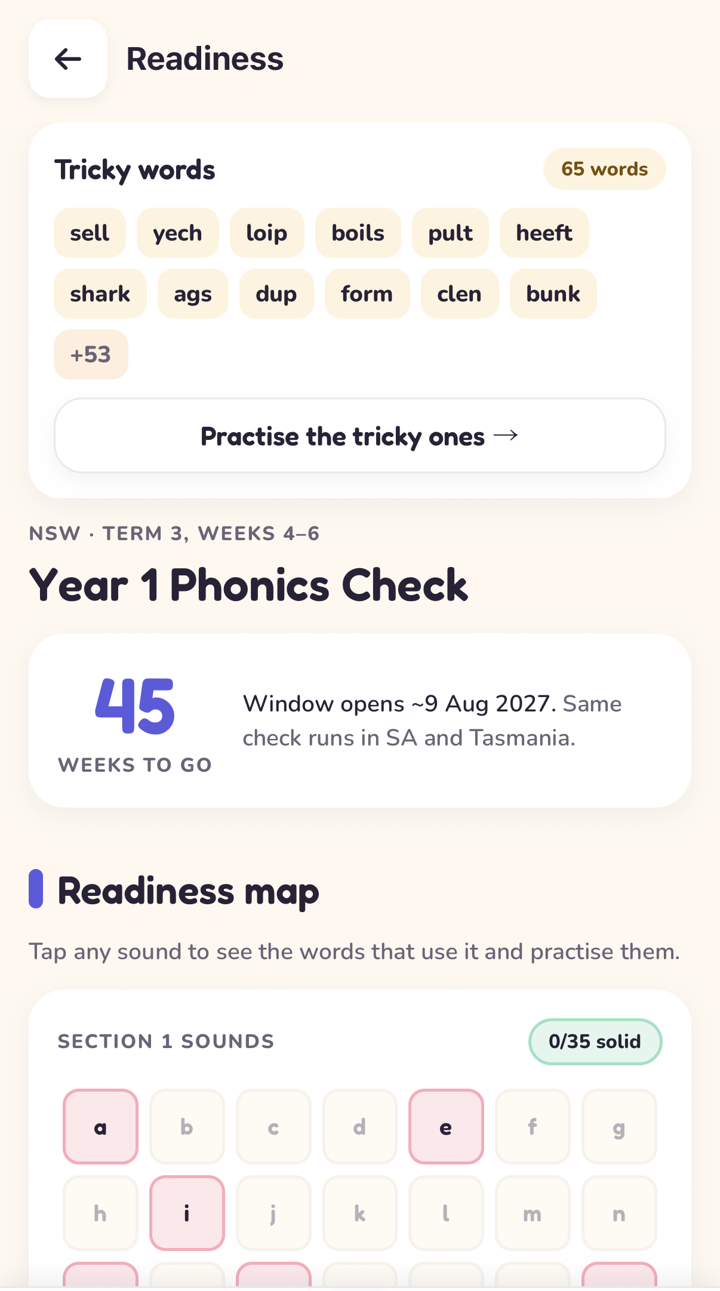
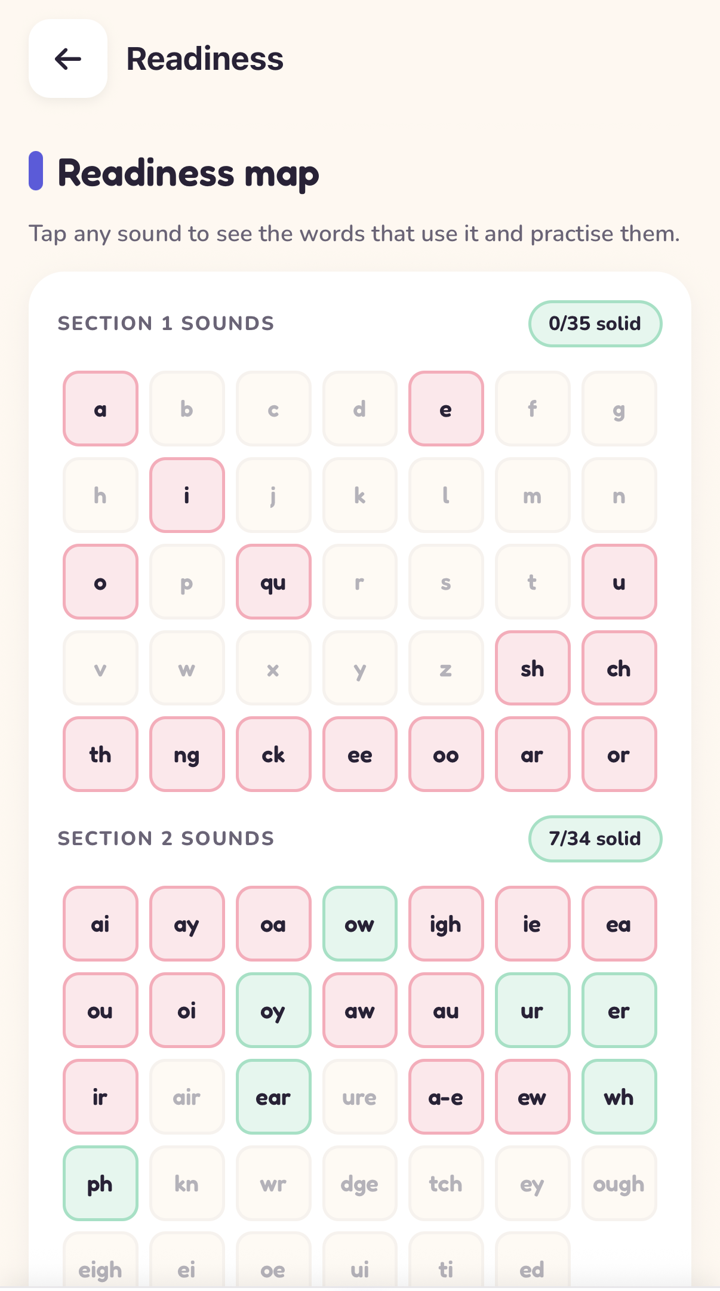
- A Readiness Map of all 70 phonograms, coloured from light to dark green as your child reads each sound correctly.
How a parent runs a paper (about 5 minutes):
- Pick a paper.
- Your child reads each word aloud, one per screen, with no timer.
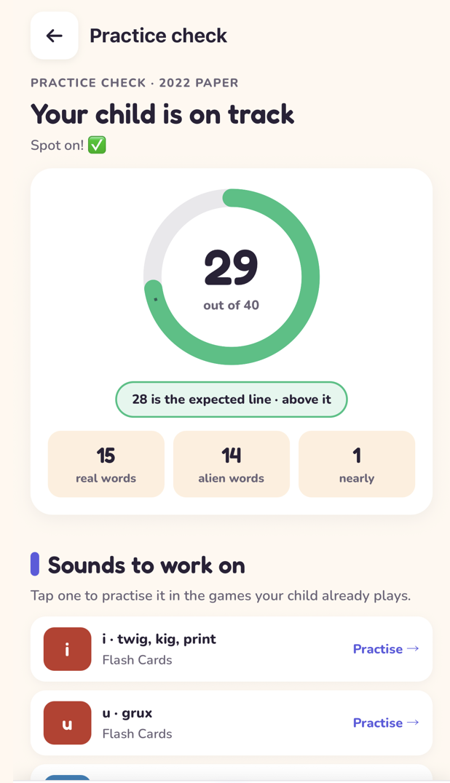
- You tap ✓ if they read it correctly or ✗ if not. A word that needed sounding out first is recorded as "nearly".
- The result screen shows the score against the 32-mark expected standard and which phonograms to work on.
A note on pressure
Six-year-olds pick up on our anxiety far faster than they pick up on split digraphs. Schools deliberately keep the check low-key, and so should you. Two weeks of nightly cramming in May does less than ten minutes of play three times a week from January. If it stops being fun, stop, and come back tomorrow.
Questions parents ask
When is the Phonics Screening Check in 2027?
In the week beginning the second Monday of June, which is the pattern used every year. Your school will confirm the date. Children who are absent that week can take it the following week.
What is the pass mark for the phonics screening check?
32 out of 40. It has been 32 every year since 2012. Officially it's called the "expected standard" rather than a pass mark.
What percentage of children pass the phonics check?
In 2025, 80% of Year 1 children in England met the expected standard. By the end of Year 2, after a retake for those who didn't, the figure is about 89%.
Can I see the past papers?
Yes. Every past paper is published on GOV.UK. Phonogram Fun includes all twelve of them, laid out one word at a time with sound-out on tap, so you can run one at home like a teacher would.
What if my child is absent, or has special educational needs?
Children who miss the week take the check the following week. A school can also decide a child shouldn't take it yet, for instance if they are very new to English or working well below the level of the check, and will discuss that with you.
Does the phonics check affect anything later?
No. It's diagnostic. It doesn't appear on any transcript, doesn't affect setting, and doesn't feed into SATs. Its purpose is to make sure children who need more phonics support get it in Year 2.