By seven, most children can decode. Year 2 (second grade in the US) is where the emphasis shifts from reading words to spelling them correctly and reading them fast enough that the meaning comes through. The weekly list gets harder, the rules get more explicit, and for the roughly one in five who didn't meet the standard in Year 1, the phonics check comes round again.
What a seven-year-old is learning
- Suffix rules. Drop the e (hope to hoping), double the consonant (hop to hopping), change y to i (happy to happier). These are the first real spelling rules and they're worth learning as rules.
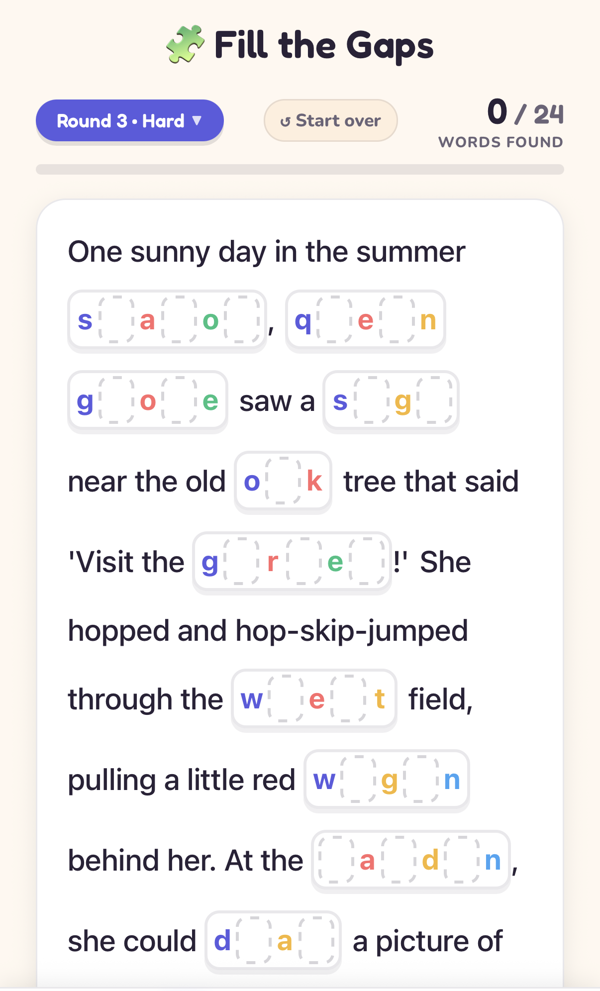
- More phonograms and their less common sounds. kn, wr, gn (silent letters that aren't silent in the phonogram view: kn is just a two-letter way of writing /n/), dge, tch, le, al, el, il, -tion.
- Homophones. there/their/they're, to/too/two, hear/here.
- Common exception words for Year 2: because, beautiful, could, would, people, every...
- Fluency. Reading at a pace where the story arrives, with expression. This comes from re-reading and from lots of easy reading, not from hard books.
- Apostrophes, plurals, past tense in writing.
Why the phonogram view keeps paying off
Take knight. Six letters, three sounds: knight. A child who's been taught the 70 phonograms doesn't see two silent letters and a weird gh; they see /n/ /ie/ /t/ written with the phonograms kn, igh and t. That's not a trick, it's how English spelling actually works, and it's why children who learn it this way find Year 2 spelling less frightening than the ones who've been told English is full of exceptions.
If your child is retaking the phonics check
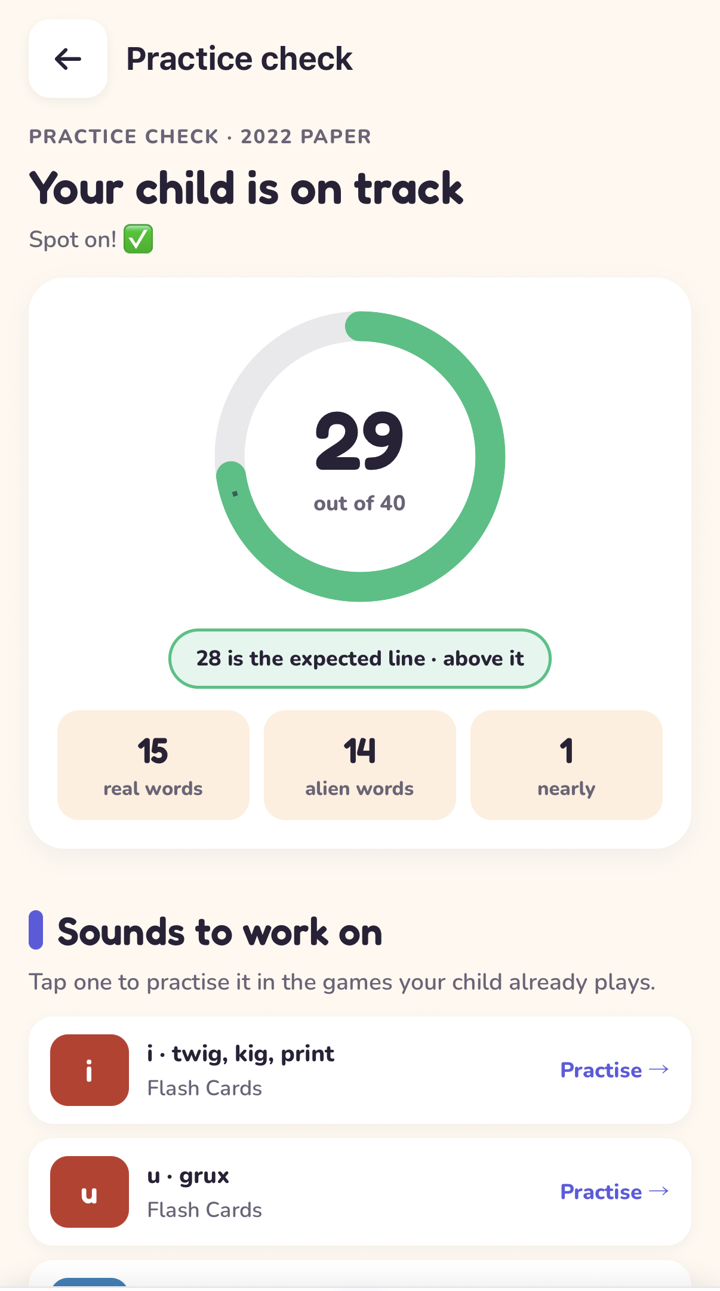
First: this is common (about a fifth of children in England, more in Australia) and it's not a verdict. Most children who miss the standard in Year 1 are a few marks short, and about nine in ten meet it by the end of Year 2. The school will already be giving extra support. What helps at home:
- Find out which sounds. Ask the teacher, or run a past paper at home and look at exactly which phonograms went wrong. It's rarely "everything"; it's usually four or five specific patterns.
- Work those, and only those, a few minutes a day. Targeted beats broad.
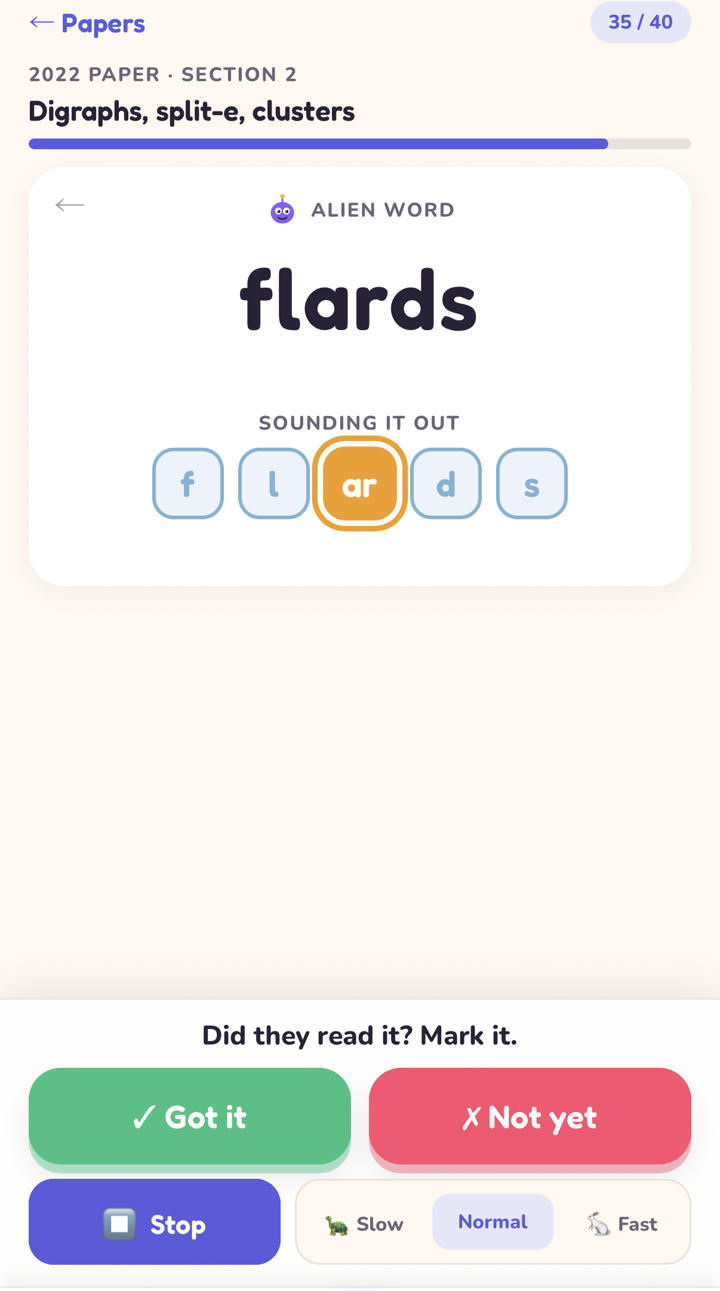
- Alien words. If the marks were lost by turning shup into ship, that's a habit, not a phonics gap, and it's the easiest thing to fix.
- Keep it light. A child who's had one disappointing result needs the second one to feel like a game.
Spelling lists at seven
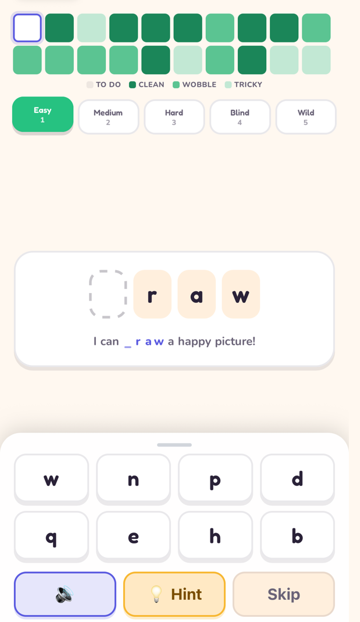
The lists now come grouped by rule (this week: words ending -tion; next week: adding -ed). The best thing you can do is name the rule out loud and ask your child to find it in each word. Then the routine from earlier years still works: sound out, find the phonogram, write once carefully, mini test mid-week, keep last week's words alive.
The thing that changes at seven is that forgetting becomes the main enemy. They can learn ten words for Friday; the question is whether they still have them in a month. Short, mixed revision of old lists (five words, three lists back) is the cheapest insurance there is.
Beyond phonics
By the end of Year 2, phonics stops being a subject and becomes a tool. A child who can decode anything, knows the 70 phonograms and has a routine for spelling words is ready for the shift to reading for meaning that happens at eight. Keep reading to them, keep them reading easy books for fun, and let the hard words be alien words they can sound out.
Questions parents ask
Should a 7 year old still be doing phonics?
Yes, but as spelling rather than reading. Year 2 phonics is about suffix rules, alternative spellings, homophones and the trickier phonograms. A child who's still struggling to blend at seven should have that looked at by the school.
What happens if my child fails the phonics check twice?
There's no third check. The school continues to provide phonics support into Year 3, and you'll have a clear picture of which sounds need work. Ask for a specific list and target those at home.
How can I help my 7 year old with spelling?
Teach the rule, not the word. Name the pattern for the week, find it in each list word, sound out and find the phonograms, write once carefully, mini test mid-week, and keep revisiting old lists in short bursts so the words stick.
How fast should a 7 year old read?
Benchmarks vary by programme, but by the end of Year 2 most children read a familiar book smoothly with expression. Fluency comes from re-reading and easy reading, not from being pushed onto harder books.