If five was the year reading clicked, six is the year it gets complicated. Year 1 in England and Australia (first grade in the US) is when children discover that /ai/ can be spelt ai, ay, a-e, eigh or ey, that ea says one thing in bread and another in bead, and that the weekly spelling list is here to stay. It's also the year of the phonics screening check. Here's what to expect and where to put your ten minutes.
What a six-year-old is learning
- Alternative spellings for sounds they already know. /ee/ as ee, ea, e-e, y, ie. /oa/ as oa, ow, o-e, oe. This is the bulk of Year 1 phonics.
- Split digraphs: ca-ek the "magic e" that reaches back to change the vowel. cap to cape, hop to hope.
- Alternative sounds for phonograms they know: ow in cow and in snow; c in cat and in city.
- Two-syllable words and simple compound words: sunset, rabbit, pocket.
- Suffixes: -s, -es, -ing, -ed, -er, -est.
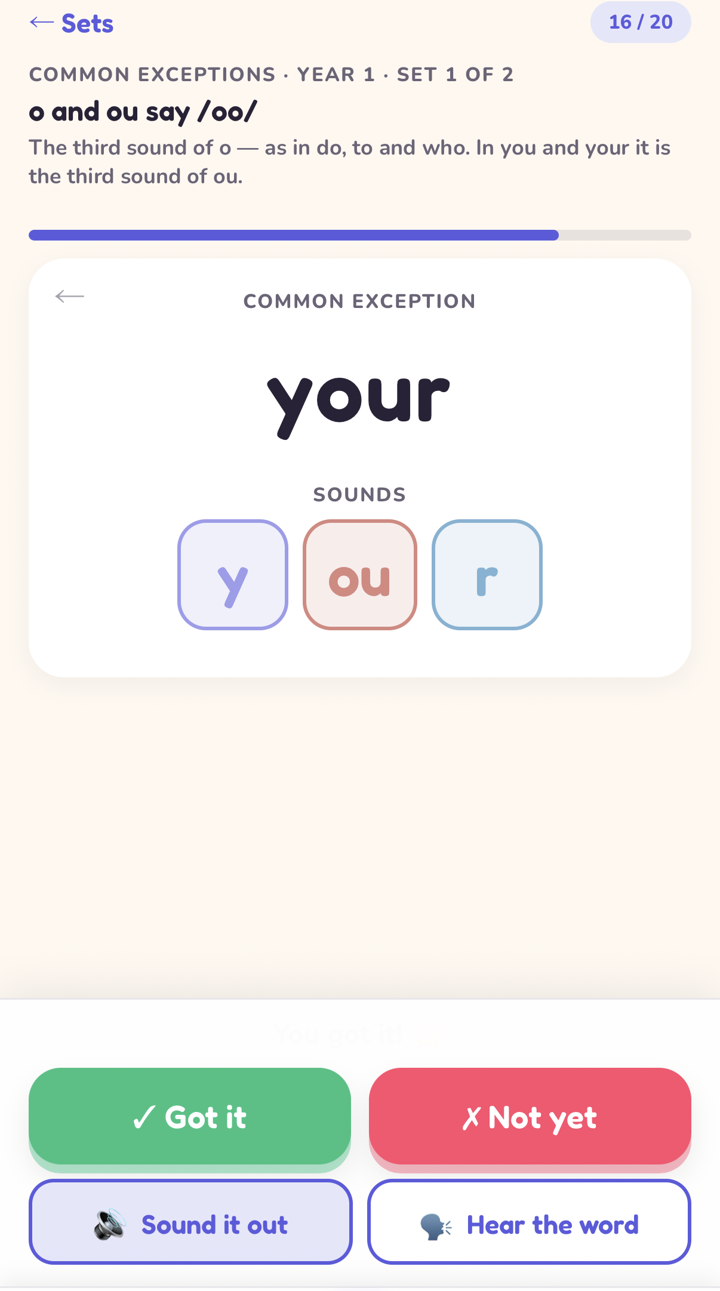
- More common exception words, and using the ones they know in writing.
Why the 70 phonograms make this year easier
The alternative spellings are where a lot of children (and parents) decide English is random. It isn't. There are about 70 phonograms in English, each with a small fixed set of sounds. ough has six; most have one or two. A child who's been shown the 70 as a system, rather than meeting them one at a time as exceptions, has a place to put every new spelling. That's the Spalding approach and it's what the app's 34 phonogram modules walk through, in order, from first sounds to confident speller.
The phonics check
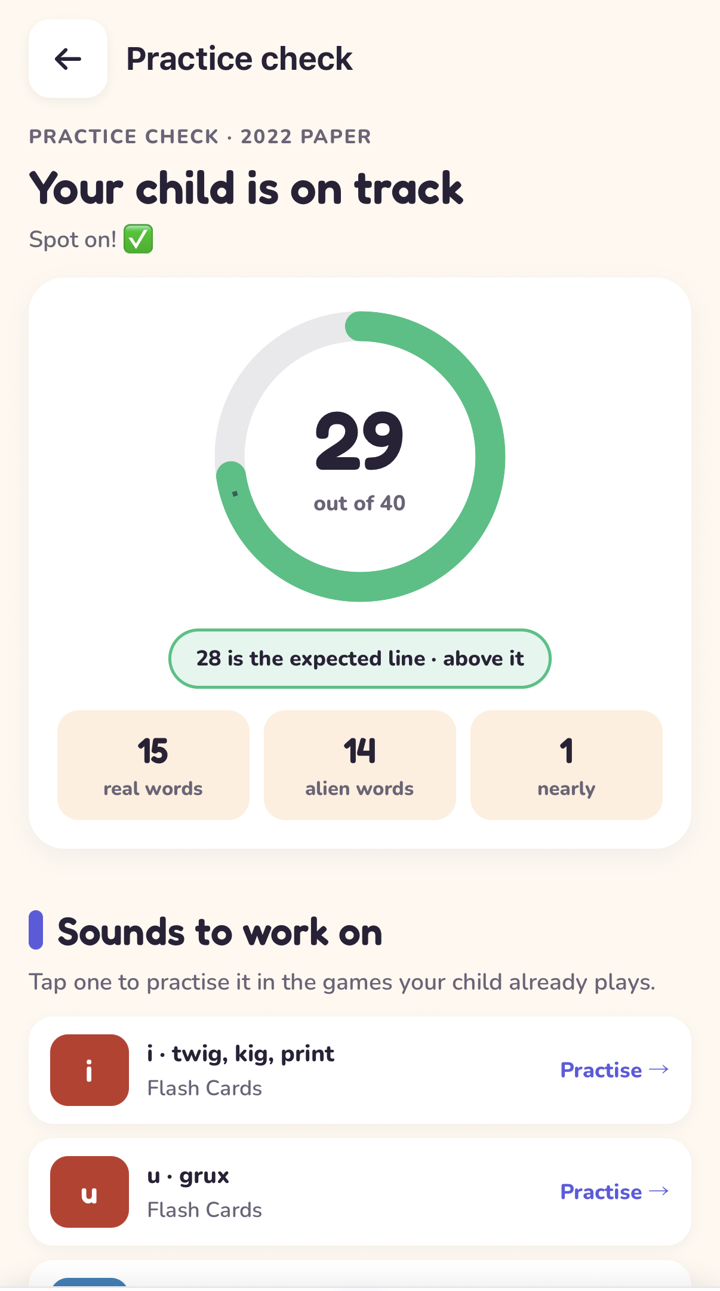
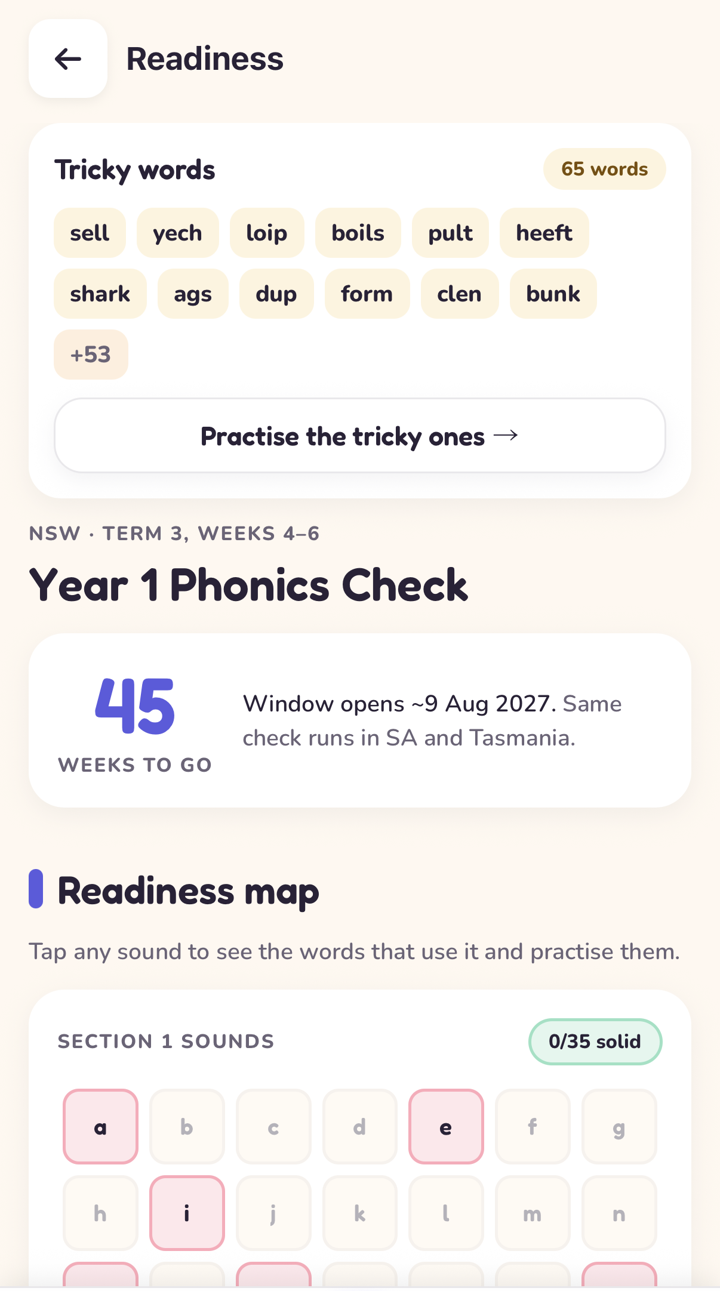
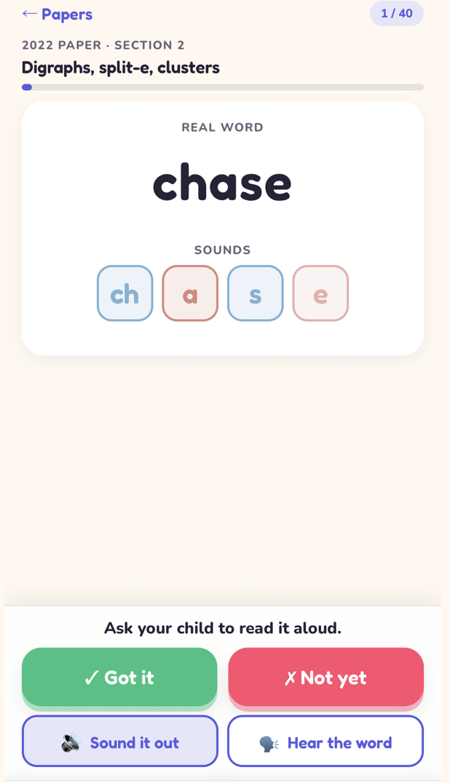
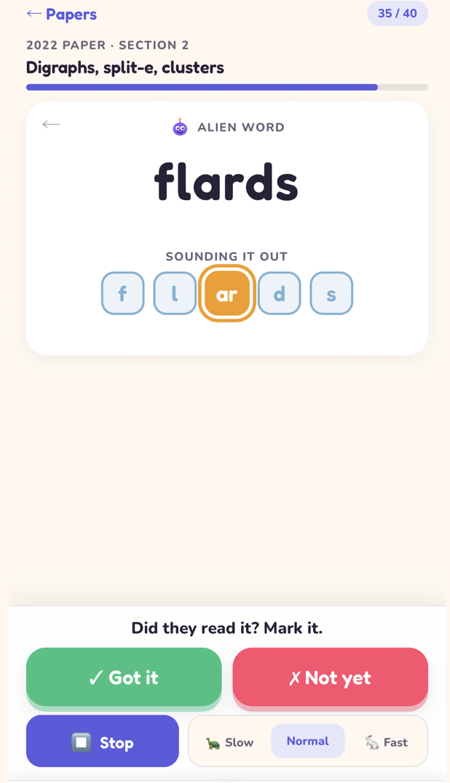
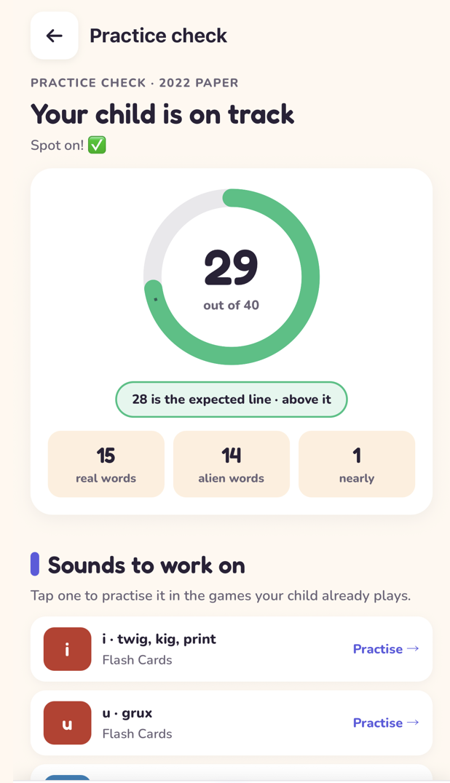
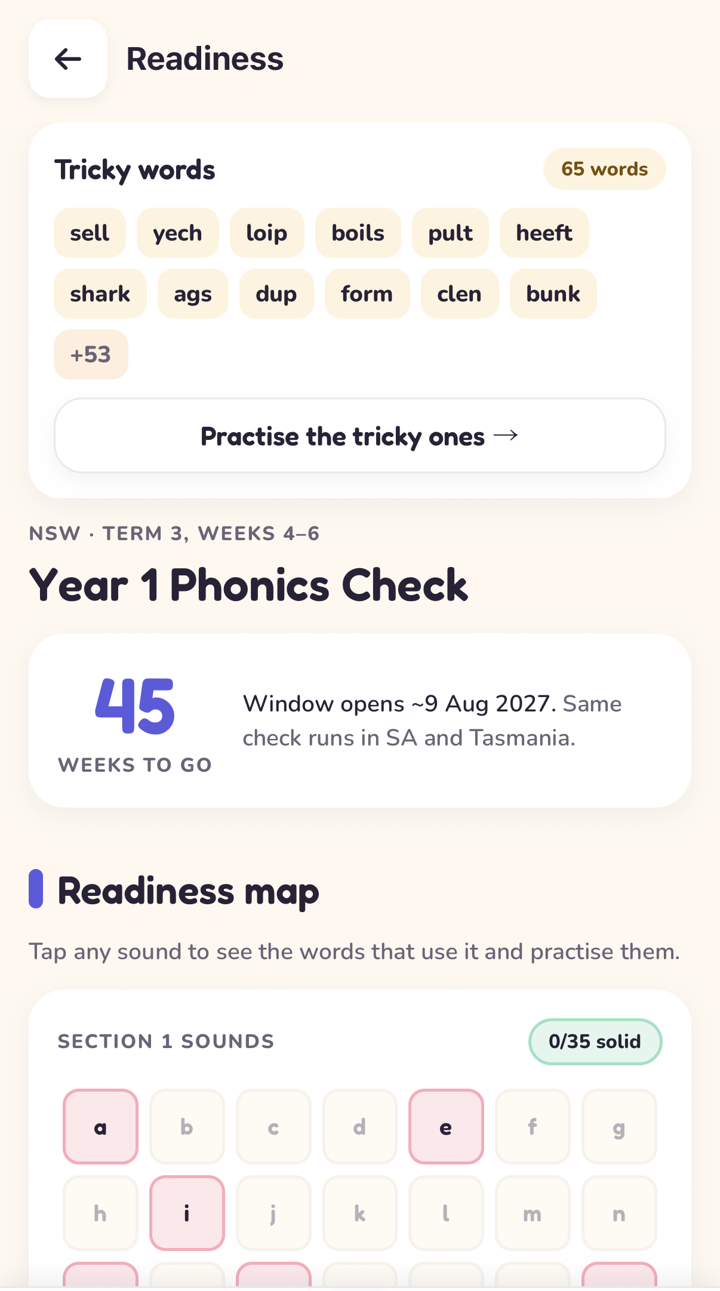
In England it's in June; in six Australian states it's Term 3. Forty words, half of them made-up alien words, read one to one to the teacher. In England 32/40 is the expected standard and about 80% of children meet it; in Australia the line is 28/40 and in NSW about 64% met it in 2025. It's low-key by design and you should keep it that way at home. The most useful preparation is:
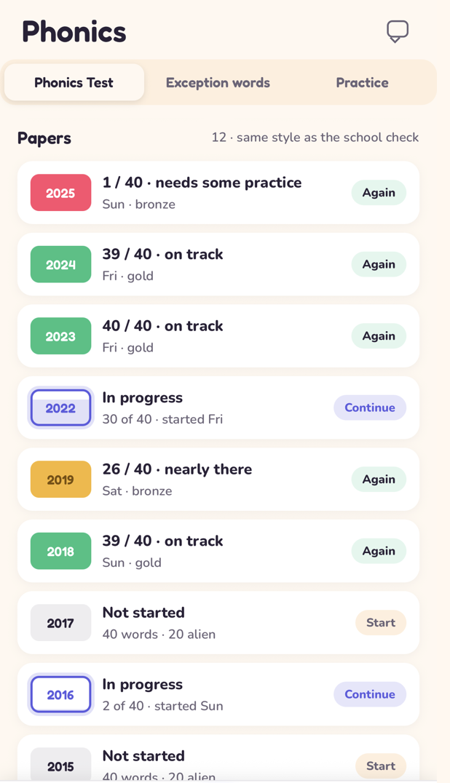
- ✓Practising on real past papers, so the format holds no surprises.
- ✓Practising alien words, because good readers lose marks by "correcting" them into real words.
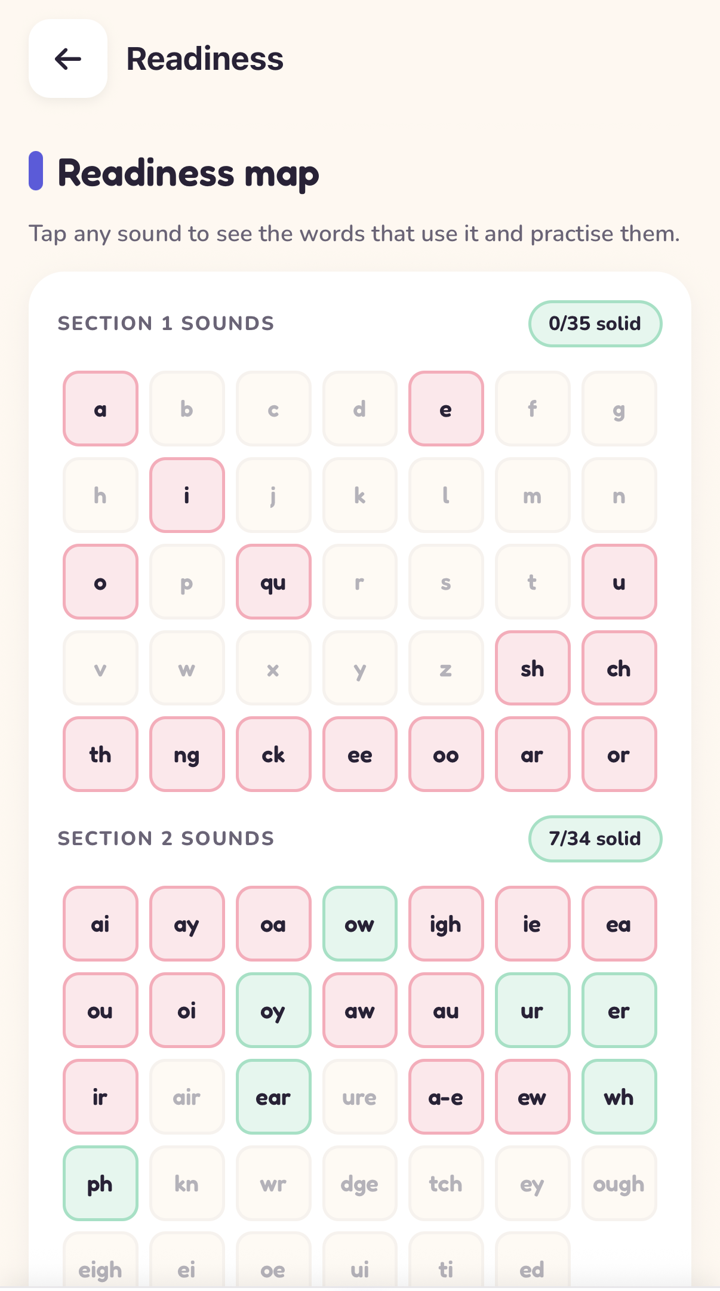
- ✓Finding the specific phonograms that wobble (often igh, ure, air, ew) and spending your ten minutes there.
The weekly spelling list, without the fight
Ten words on Monday, test on Friday, every week until you lose count. The routine that keeps it sane:
- Monday: sound them out together. Find the phonogram in each word that makes it a Year 1 word (the a-e, the igh, the -ing). That's the bit to learn; the rest they can already do.
- Tuesday to Thursday: five minutes, different game each night. Say and write, fill the gaps, dictation, whatever keeps it fresh. Same words, different angle.
- Wednesday: mini test. Only the ones they miss get more attention.
- Every night: two words from last week. The Friday test is not the finish line; remembering in three weeks is.
The tell that it's working: they start spotting the phonograms in other words. "That's got igh in it like night!"
Reading at six
Keep the decodable books going until the school says otherwise, and let them read whatever they love alongside. Reading to them still matters more than most parents think: a six-year-old's listening vocabulary is years ahead of their reading vocabulary, and that gap is where comprehension grows.
Questions parents ask
What phonics should a 6 year old know?
By the end of Year 1: all the single sounds and common digraphs, the main alternative spellings for the vowel sounds, split digraphs, two-syllable words and simple suffixes, plus a growing set of common exception words. That's the content the phonics screening check samples.
How do I prepare my 6 year old for the phonics screening check?
Ten minutes a few times a week from the start of the year. Use real past papers, practise alien words, sound out rather than say it for them, and work on the specific phonograms that wobble. Keep it playful; children pick up on pressure fast.
My 6 year old can read but can't spell. Is that normal?
Very. Reading (blending) comes before spelling (segmenting and choosing the right phonogram) for almost every child. Spelling catches up through Years 1 and 2 as they learn which alternative spelling goes where.
How many spelling words a week is normal for Year 1?
Usually 8 to 12, grouped around a phonogram or rule. If your child is regularly getting them all right on Monday, ask the teacher for a stretch list; if they're getting most wrong on Friday, the routine above (and fewer words, done well) usually fixes it.