If you've got a kindergartner or first grader, you may have seen a report come home with letters like DIBELS, Acadience or "NWF" on it and a number that was either green or not. That's your school's early literacy screener. Under the wave of "science of reading" laws passed across the states in the last few years, most districts now screen every K–2 child a few times a year to catch reading difficulties early.
What the screeners measure
They vary by district, but almost all of them test the same handful of skills in one-minute, one-on-one tasks:
- Letter naming and letter sounds: how many can your child say in a minute.
- Phoneme segmentation: "Say the sounds in ship" (/sh/ /i/ /p/).
- Nonsense word fluency: reading made-up words like vap, mip, lut. This is the one that surprises parents, and it's the most important. A child can memorize cat; nobody has memorized vap. Reading it proves they can decode.
- Oral reading fluency (from mid first grade): words read correctly per minute from a short passage.
Ask your child's teacher which screener they use and what the benchmark is. Most will happily show you the numbers.
The 40-word check the rest of the English-speaking world uses
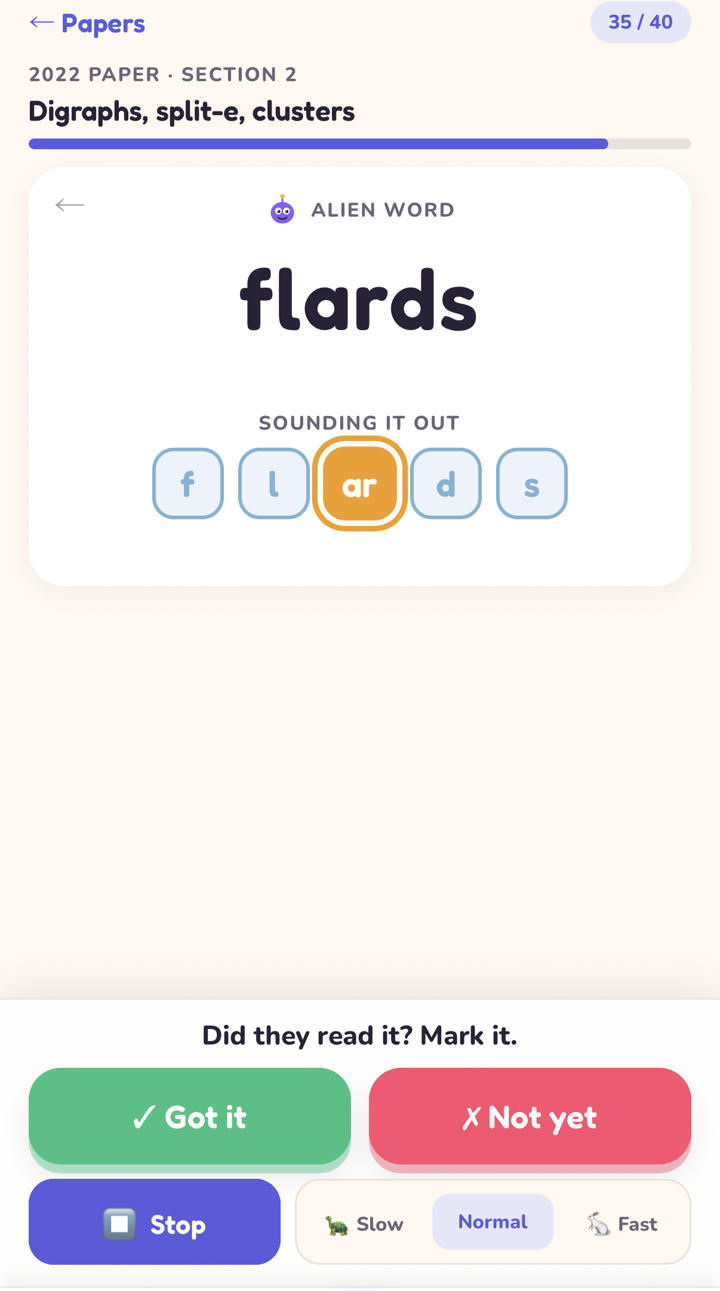
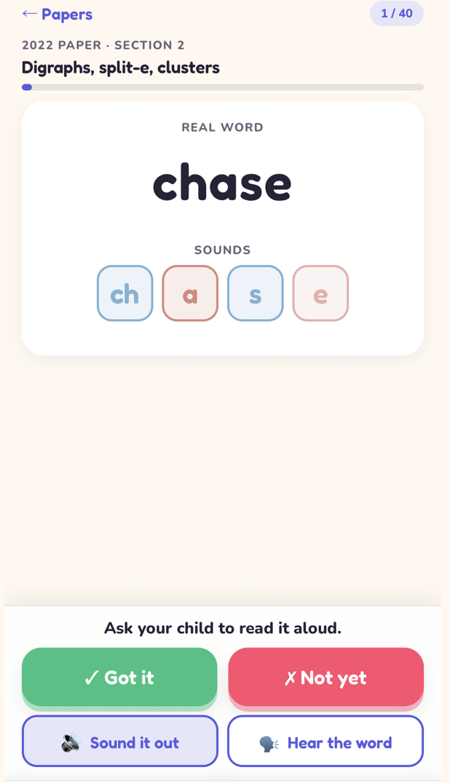
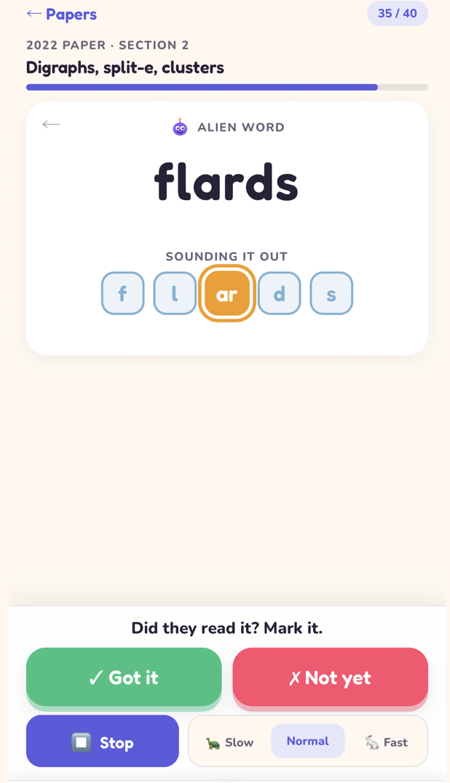
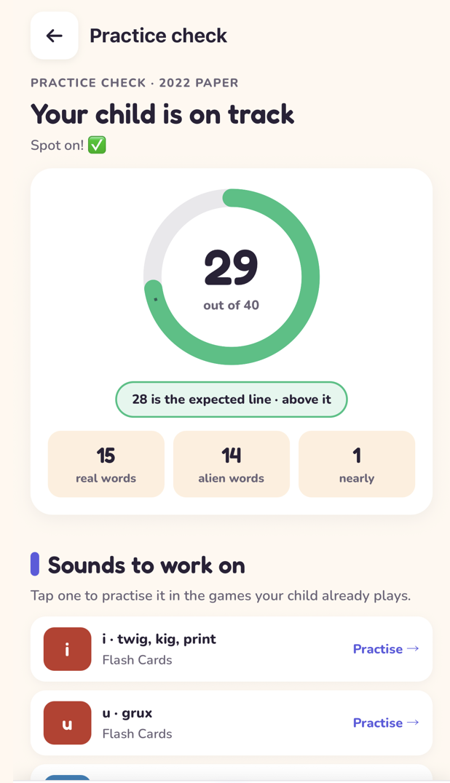
England, Australia and New Zealand go further: every child in the equivalent of first grade sits a standardised Phonics Screening Check. Forty words, half real, half made-up "alien" words, read one at a time to the teacher. In England, 32 out of 40 is the expected standard and about 80% of six-year-olds meet it.
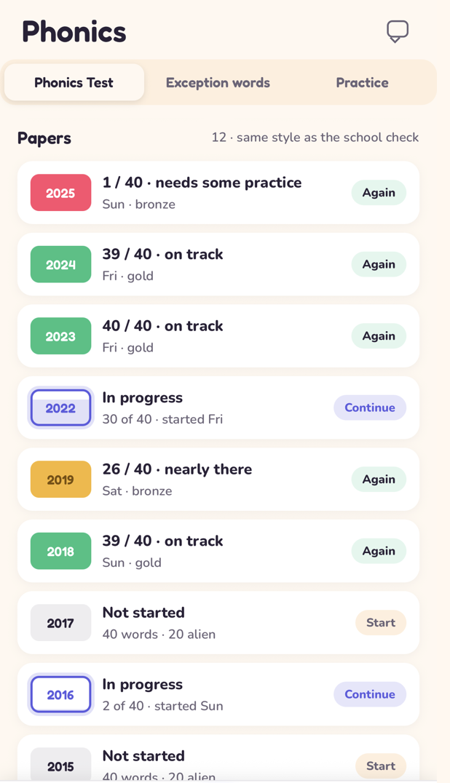
Why it's useful to you: it's a clean, untimed, well-designed test of decoding, the past papers are public, and it maps directly onto what your school's nonsense-word screener is looking for. If your child can read a past paper comfortably, they're in good shape on any screener. If they stumble on the alien words, you've found the thing to practice.
What to practice at home
- Pure sounds. mmm, not muh. It makes blending far easier.
- Blend out loud, every day. "What's c-a-t?" in the car, at dinner, in the bath. Then let them do the segmenting: "What are the sounds in dog?"
- Nonsense words, as a game. Make them up together. The sillier the better. The rule is you have to read what's there, not what it looks like.
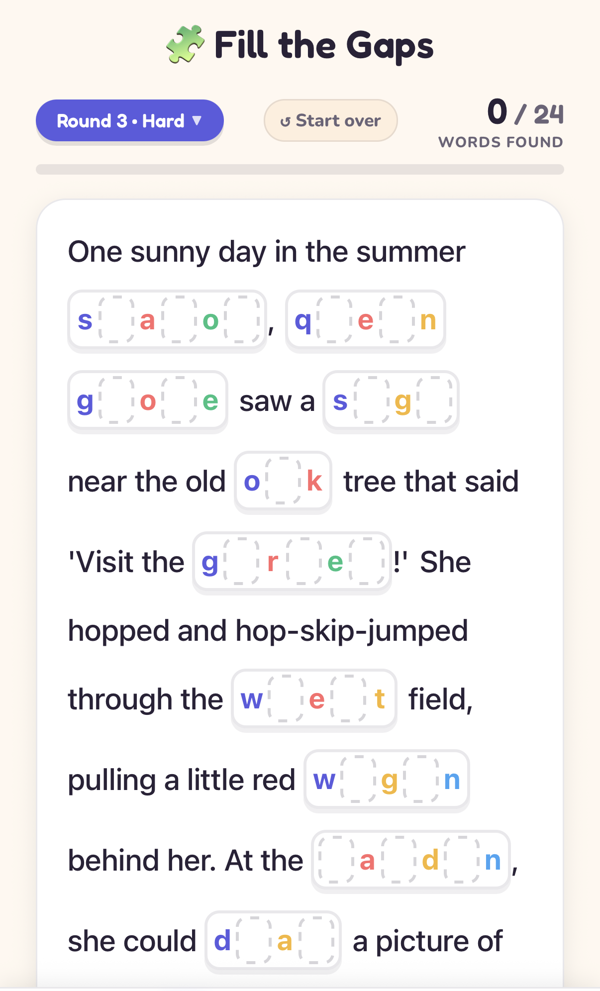
- Learn the letter teams. English has about 70 letter-sound combinations (sh, ch, ai, igh, ough...). Kids who know them don't get ambushed by new words.
- Decodable books first, then everything. Books that only use sounds they've learned build confidence fast. Once they're blending, let them loose on whatever they love.
And keep reading aloud to them. Decoding gets them the words; being read to gives them the vocabulary and the reason to want it.
Questions parents ask
Does the US have a national phonics test?
No. Screening is decided by states and districts. Most now require an early literacy screener in K–2 (DIBELS 8, Acadience, i-Ready, mCLASS, FastBridge and others are common). Ask your teacher which one your school uses.
Why is my first grader being tested on nonsense words?
Because nonsense words can't be memorized. Reading vap correctly proves your child is decoding letter by letter rather than recognizing whole words or guessing from a picture. It's the most reliable early signal of whether phonics is sticking.
Is the UK phonics check useful for American kids?
Yes. It tests the same decoding skill your school's screener does, it's untimed and child-friendly, and the past papers are public. The only difference is a handful of British spellings, and Phonogram Fun lets you choose an American voice.
What age should my child be reading by?
Most children are blending simple words by the end of kindergarten and reading short decodable books during first grade. Wide variation is normal; what matters is steady progress and that letter sounds and blending are in place by the end of first grade.