Five is a big year. It's Reception into Year 1 in England, Kindergarten/Prep into Year 1 in Australia, kindergarten in the US. It's when most children go from knowing sounds to reading words, and when the first bits of homework (a decodable reader, a list of words) start turning up in the bag. Here's what's happening and how to make it go smoothly.
What a five-year-old is learning
- Blending three-sound words on sight: c-a-t, s-u-n, m-a-p. First out loud with lots of effort, then quicker, then automatically.
- Segmenting for spelling: hearing dog and writing d-o-g.
- Consonant digraphs: two letters, one sound. shchth plus ck, ng, qu.
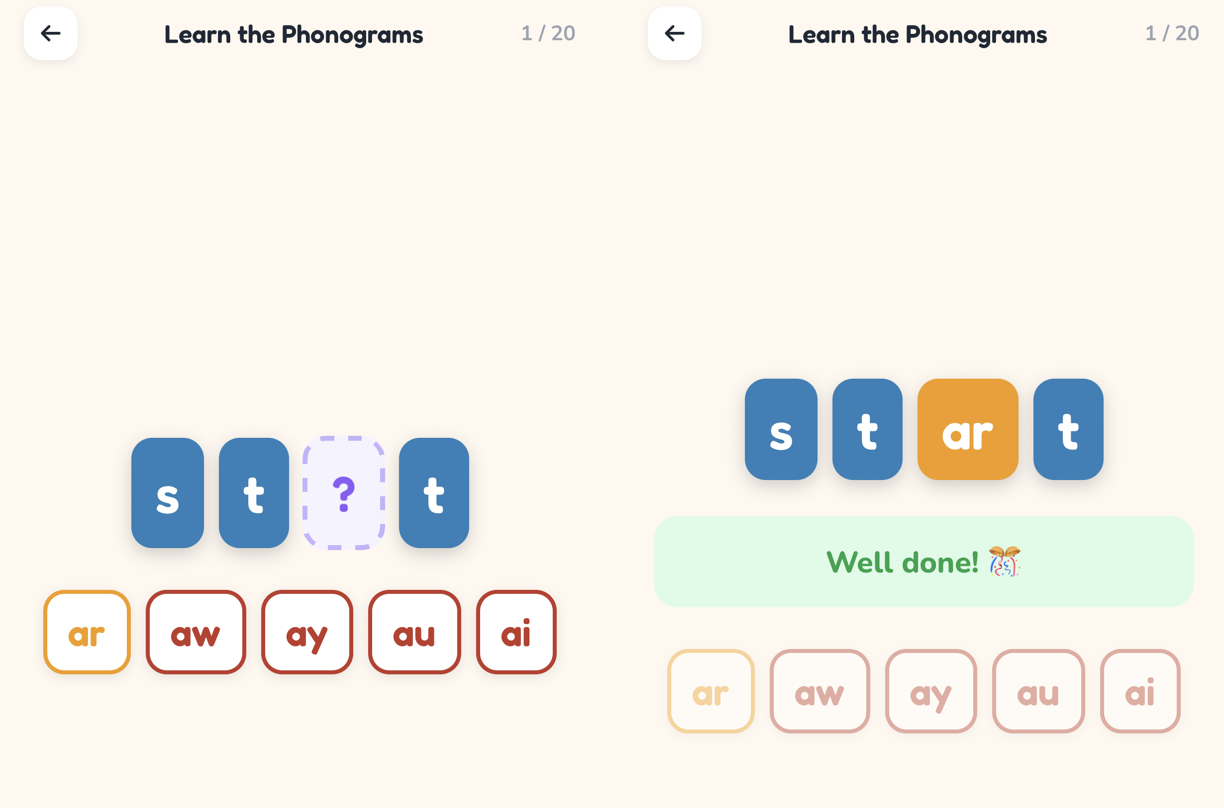
- First vowel digraphs: ai, ee, oo, oa, igh, or, ar. This is where "the letters don't say what they say" starts, and where having a system for it pays off.
- Tricky words (also called common exception words, high-frequency words, red words): the, was, said, you, they. Words where one bit doesn't follow the usual rules.
- Four-sound words with adjacent consonants: stop, jump, milk.
The idea that makes it all make sense
Most children, and most parents, hit a wall at the digraphs. Why does igh say /ie/? Why is there a k in knee? The answer that works is the one the Spalding method has used for seventy years: English isn't 26 letters that misbehave, it's about 70 phonograms (single letters and letter teams) that each have a small, fixed set of sounds. igh is a phonogram. So is ough. Once a child sees words as strings of phonograms rather than strings of letters, "sight" isn't five random letters, it's sight: three sounds they can see, hear and tap.
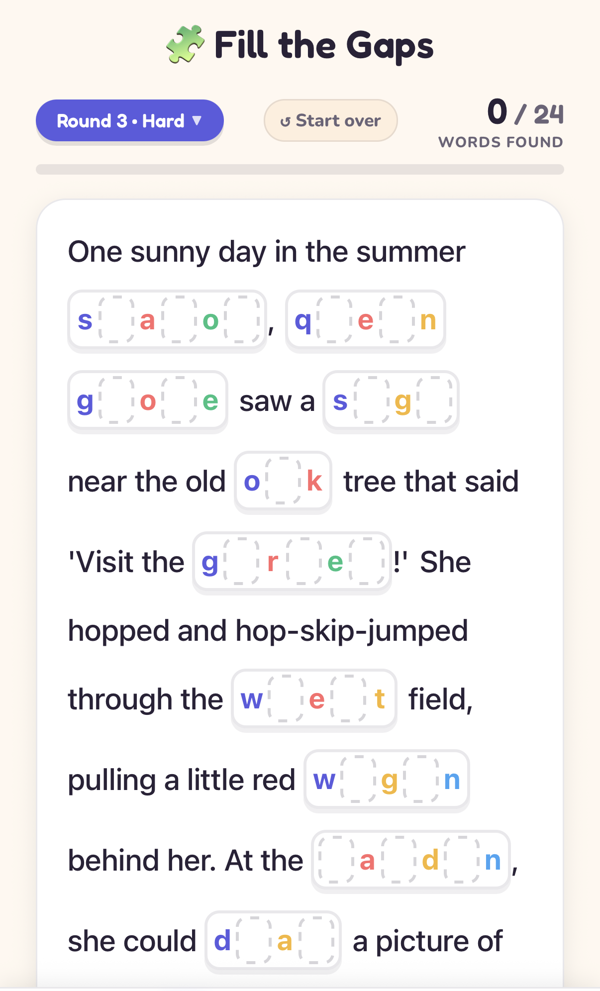
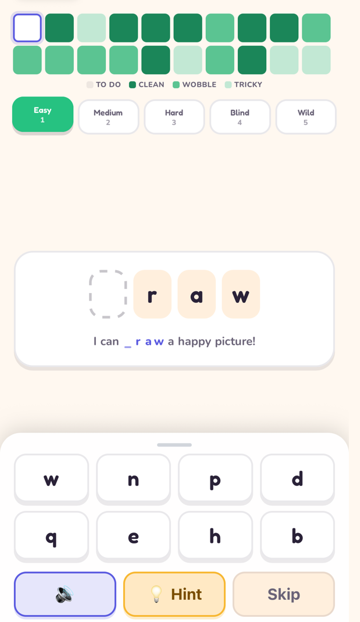
That's the idea Phonogram Fun is built on. Every word in the app splits into its phonograms, and every phonogram can be tapped to hear its sound.
Decodable readers: read them, then read them again
The little books that come home only use sounds your child has been taught. They are deliberately dull. That's fine; their job is to give your child the experience of reading a whole book by themselves using only decoding, and it works. Read it Monday, again Wednesday, again Friday. Fluency comes from re-reading. And keep reading real books to them alongside.
The first spelling list
Somewhere around now, a list of eight to twelve words arrives on a Monday with a test on Friday. Here's the routine that works, ten minutes a night:
- Say each word, then say its sounds. ship: /sh/ /i/ /p/. Three sounds, four letters. Point that out.
- Look for the phonograms. Which bit is the digraph? Which bit is tricky?
- Write it once, sounding out as they go. Not five times in a row. Once, carefully, with the sounds.
- Do a mini test on Wednesday so Friday isn't a surprise. Only re-practise the ones they missed.
- Keep last week's words alive with one or two thrown in each night. Forgetting is the default; short revisits beat it.
Signs it's going well, and signs to watch
Going well: they blend without you, they notice words in the world ("that says stop!"), they have a go at unfamiliar words rather than waiting for you.
Worth a word with the teacher: still guessing from the first letter and the picture at the end of the year, can't hear rhyme, mixes up sounds constantly, or gets upset at the sight of a book. None of these mean anything is wrong on their own, but early is always the best time to ask.
Questions parents ask
What should a 5 year old be able to read?
By the end of the year, most five-year-olds can blend simple three and four-sound words, know the common consonant digraphs (sh, ch, th, ck) and a first set of vowel digraphs, read a short decodable book independently, and recognise a few dozen tricky words.
How do I help my 5 year old with spelling words?
Sound them out rather than memorise the letters. Say the word, say the sounds, find the phonograms, write it once carefully. Ten minutes a night with a mid-week mini test, and only re-practise the words they missed.
What are tricky words?
Words with a part that doesn't follow the usual sound rules yet, like was, said or the. Schools call them tricky words, common exception words, high-frequency words or red words. Most are more regular than they look once you know the 70 phonograms.
Is it OK if my 5 year old isn't reading yet?
Yes. There's a wide normal range. What matters is that letter sounds are going in, they can hear sounds in words, and they're moving forward. If you're worried, talk to the teacher; they'll have a clear picture.