I'm Paul, the maker of Phonogram Fun. I'm an Australian dad, and I built the app because the weekly spelling list kept coming home and I wanted a better way to practise it than copying each word out five times. Since then I've built in the Year 1 Phonics Screening Check papers, British voices and British spelling. This page explains how the app works for families in the UK, what it costs, and the ten-minute routine I'd suggest. If you're in Australia, there's an Australian version of this page.
What problem was I trying to solve?
Most children learn to read well when they're taught to work out an unfamiliar word from its sounds. That's the thinking behind systematic phonics in Reception and Year 1, and it's what the Phonics Screening Check looks for. In 2025, 80% of Year 1 pupils in England met the expected standard, unchanged from 2024. That's a good result, and it still means about one child in five goes into Year 2 needing more help with phonics.
Phonogram Fun is built on one idea: English spelling is mostly made of about 70 phonograms, the letters and letter teams that stand for sounds. Once a child can see them, most words stop looking random, and both spellings homework and the check get easier.
Why do weekly spellings cause so many arguments?
Because the usual way of practising them is hard work with very little feedback. A tired child at the end of the school day is asked to write ten words out again and again. If the first attempt is wrong, the rest practise the mistake. And it's easy to start with "spell night for me", which is a test before anyone has shown them how the word is built.
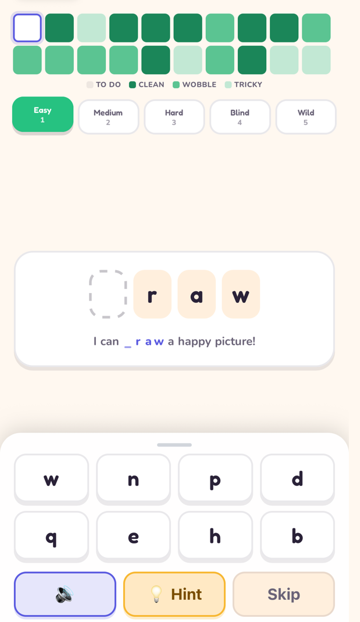
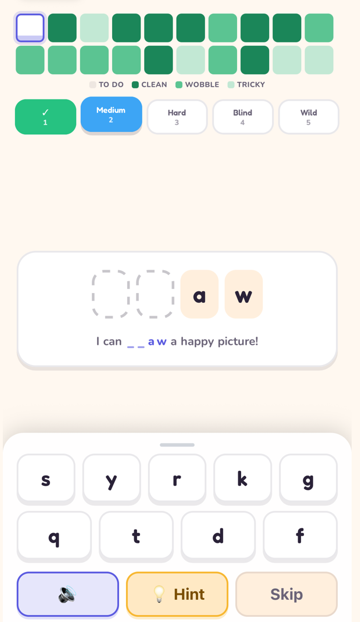
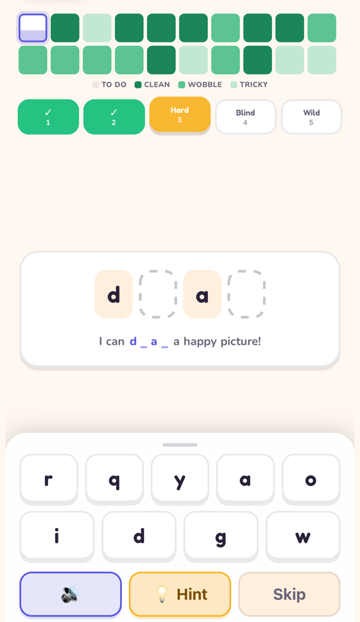
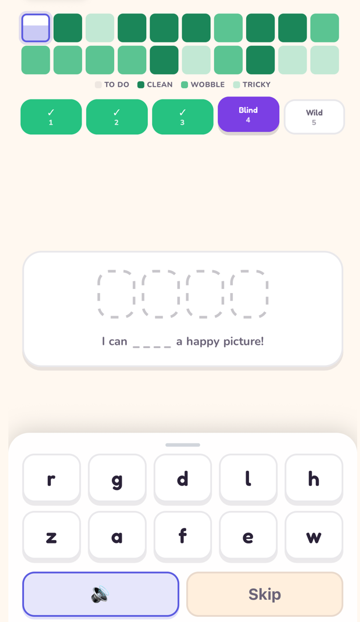
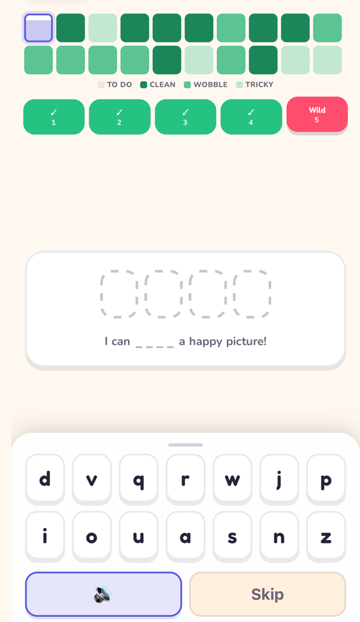
So the first thing I built was the part that deals with spellings homework. You take a photo of the sheet that comes home, or type the words in, and those exact words become Word Climb, a game with several rungs. Your child hears the word, sounds it out, builds it from phonogram blocks, fills the gaps in a short story, and works up to a blind spell with nothing showing. Alongside Word Climb there's dictation practice, flash cards and a revision mode, all using the same list. It's the same repetition the Friday test needs, but each step teaches something before it asks for it.
What is the Phonics Screening Check, and how does the app help?
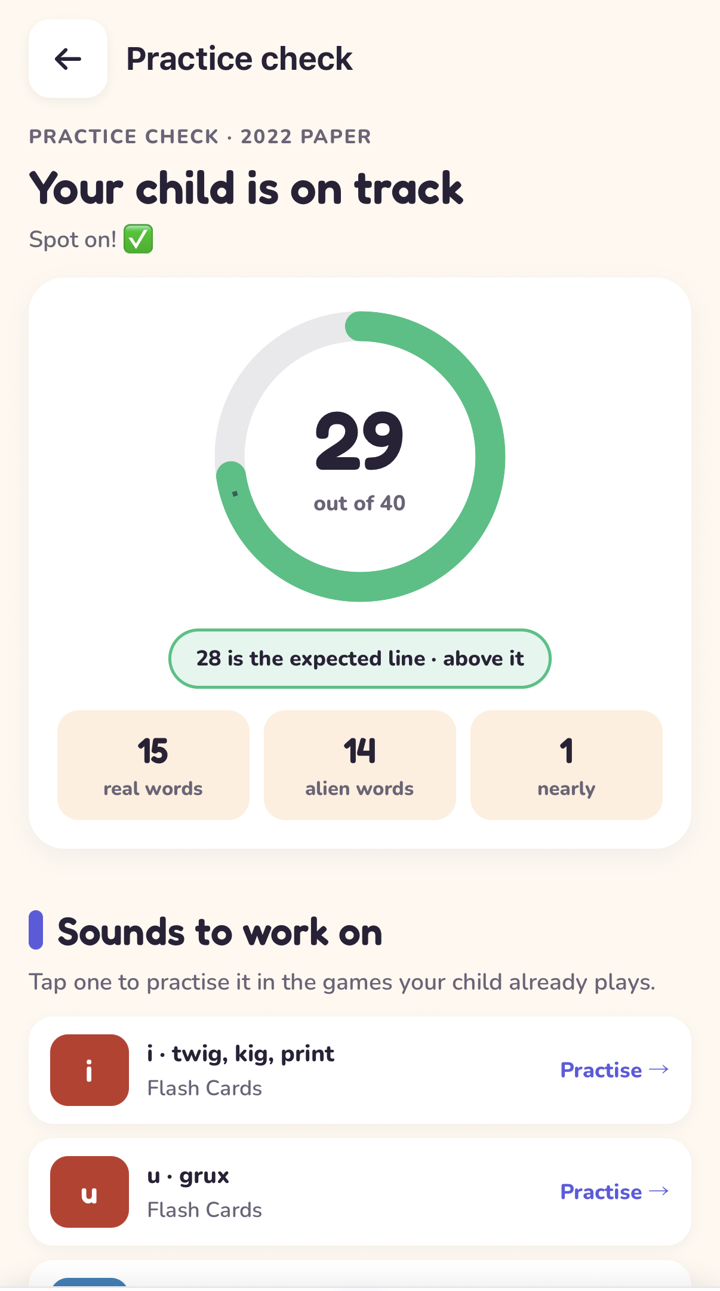
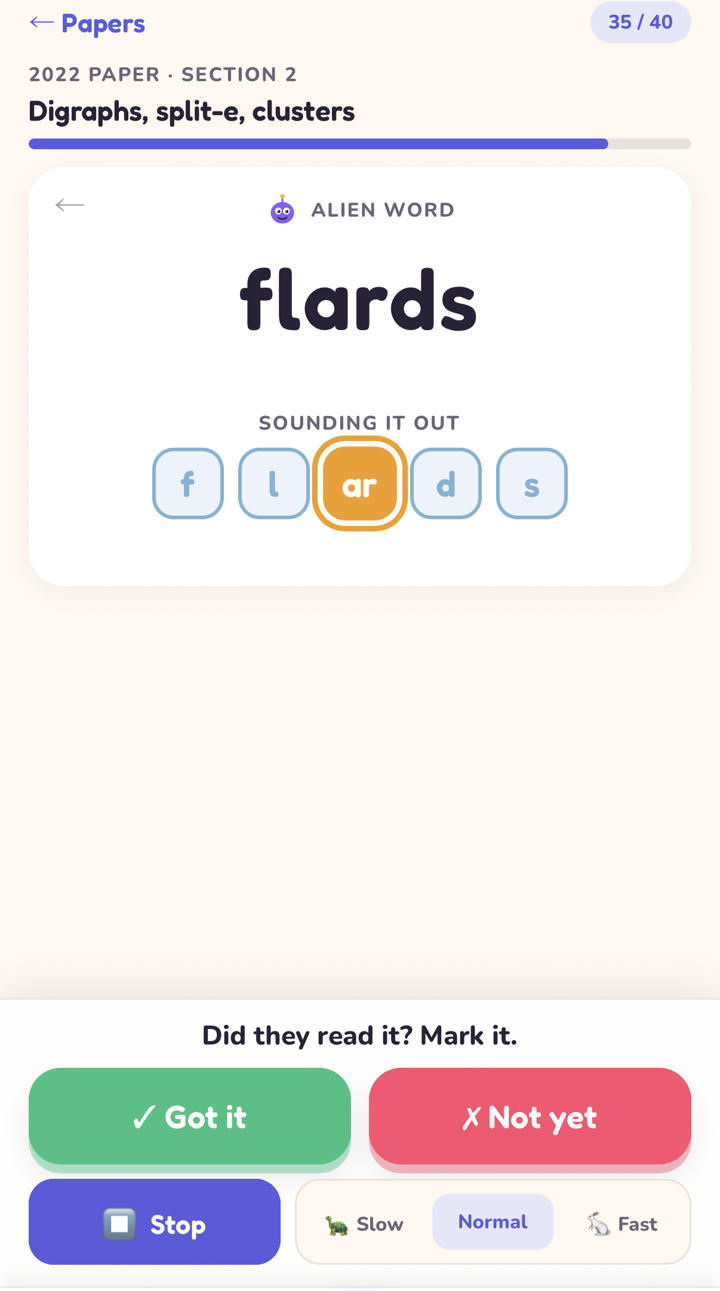
The Phonics Screening Check is statutory for Year 1 pupils in England. According to the Standards and Testing Agency's 2026 assessment and reporting arrangements, it ran from Monday 8 June to Friday 12 June 2026. Each child reads 40 words aloud to their teacher, one to one. The assessment framework sets out the mix: 20 real words and 20 pseudo-words, across two sections, with each pseudo-word shown next to a picture of an imaginary creature. For the 2025 check, the threshold mark was 32 out of 40. Children who don't reach it get extra support and take the check again in Year 2.
The pseudo-words, which most children and parents call alien words, are there to check that a child is decoding rather than recognising words they've memorised. That's the skill the app practises. It includes 12 real past papers, published by the government, from 2012 to 2025, in the same 40-word format with real and alien words mixed. You can choose a British or Australian voice. Your child reads, you mark, and any word can be sounded out one phonogram at a time. There's more on the check itself in our parents' guide to the Phonics Screening Check.
How do I know which sounds my child is stuck on?
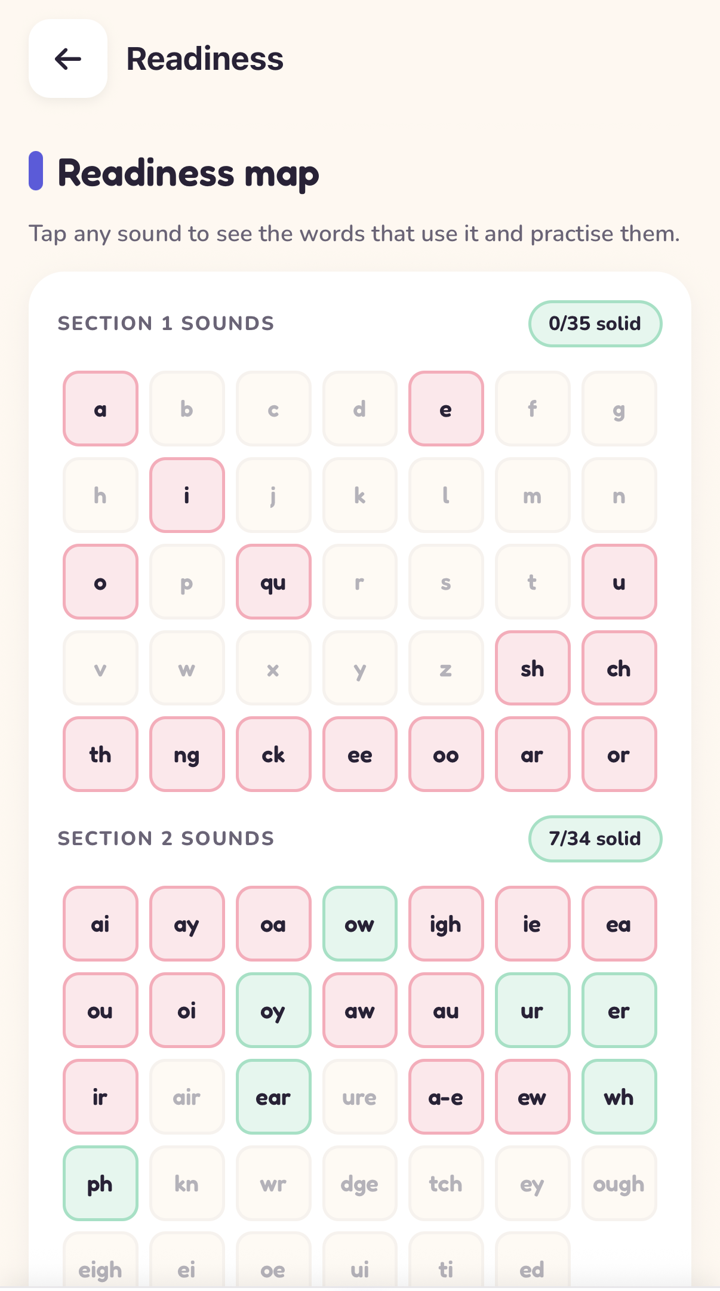
This is the part I wanted most as a parent. Rather than guessing which sounds are shaky, the app keeps a Readiness Map of all 70 phonograms. Each one goes from light to dark green as your child gets it right. If igh or oi stays pale, you know where to spend five minutes, instead of going back over every sound.
The KS1 tricky words, which the national curriculum for English calls common exception words, have their own module: 45 for Year 1 and 64 for Year 2, grouped by the rule each one breaks, so said and was make a bit more sense. Our guide to common exception words has the full lists.
What does calm screen time mean in practice?
I deliberately kept the app plain. Clean layouts, colour-coded phonogram blocks, clear audio, and no ads, ever. There's nothing flashing to keep a child playing after the useful part is done, which makes it easier to stop at ten minutes. If you add your child's first name, it stays on the device.
What does it cost in the UK?
There's a free tier with no time limit: one mission a day, the full 70-phonogram chart, Sound Play and the word analyser. Phonogram Fun Plus unlocks everything else for £2.99 a month or £24.99 a year, which works out at about £2.08 a month on the annual plan. Both come with a 7-day free trial, and you subscribe and cancel through the App Store or Google Play. On iPhone and iPad, Family Sharing is switched on.
It runs on iPhone, iPad (laid out for landscape), and Android phones and tablets. Private tutoring costs many times more than this, and if your child needs a tutor or extra support at school, an app isn't a substitute. What it can do is make the ten minutes at home each night count.
What's the 10-minute routine I recommend?
Most spellings come home on Monday with a test on Friday. This is the week I'd suggest. Ten minutes a night, at the same time each day, before everyone is tired.
- Monday: scan and meet the list. Photograph the spellings sheet (about a minute), then play the first rungs of Word Climb for every word: hear it, sound it out.
- Tuesday: build the words. Keep climbing. When a word stalls, spend a minute on the phonogram that's causing it, then use the flash cards for a quick run through the list.
- Wednesday: sounds. In Year 1, try one past phonics check paper; in Year 2, a few common exception words. Then look at the Readiness Map and pick one pale sound for next week.
- Thursday: spell it blind. Dictation practice and revision mode, aiming to reach the blind spell rung on every word.
- Friday, before school: off the screen. Pencil and paper at the kitchen table. Mum, Dad or whoever is on duty reads the story sentences from the app aloud, and your child writes the words by hand, because the test at school is on paper.
If your child is in Reception, skip the spellings and spend the ten minutes on the sounds and the phonogram chart instead; that's the groundwork for Year 1.
How do I try it?
Download Phonogram Fun from the App Store or Google Play, start the 7-day trial, and scan this week's spellings on Monday night. If it doesn't suit your family, cancel before the trial ends and keep using the free tier. If something isn't working, email me at phonogramfun@gmail.com.
Reading from Australia? Read why I built Phonogram Fun for Australian families, with the Year 1 Phonics Check and AUD pricing.
Questions parents ask
How much does Phonogram Fun cost in the UK?
There's a free tier with one mission a day, the full 70-phonogram chart, Sound Play and the word analyser. Phonogram Fun Plus is £2.99 a month or £24.99 a year (about £2.08 a month) after a 7-day free trial, billed through the App Store or Google Play.
Does Phonogram Fun use real Phonics Screening Check papers?
Yes. It includes 12 real past papers from England's Phonics Screening Check, from 2012 to 2025, each with 40 words: 20 real words and 20 alien words. You can choose a British or Australian voice.
Can I use my child's weekly spellings?
Yes. Take a photo of the spellings sheet or type the words in, and those exact words become Word Climb, plus dictation practice, flash cards and a revision mode.
Does it cover the KS1 common exception words?
Yes. There's a separate module with 45 Year 1 and 64 Year 2 common exception words, grouped by the rule each word breaks.
What ages is Phonogram Fun for?
Children aged 4 to 12, from Reception to Year 6. It has no ads, and if you add your child's first name, it stays on the device.